Why it is unlike anywhere else
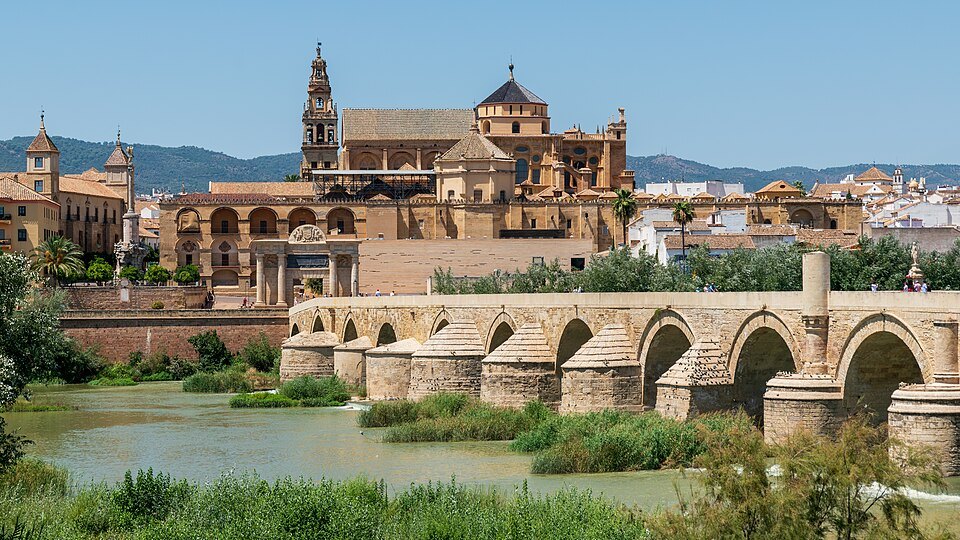
Most great buildings replaced something. This one absorbed it, twice. A Christian cathedral stands in the middle of a Umayyad mosque, which itself rose on a site already used for worship, and none of the three was cleared away to make room for the next.
The result is a building you cannot summarise. Walk in and the arcade runs off in every direction; walk to the centre and you are suddenly under a Renaissance nave with the columns resuming on the far side. Both are real, and the argument about whether the second should have happened is five hundred years old and still going.
Four campaigns, and how to read them
The building was not designed once. It was extended three times, each ruler continuing the same system outward, and you can walk the sequence from north to south.
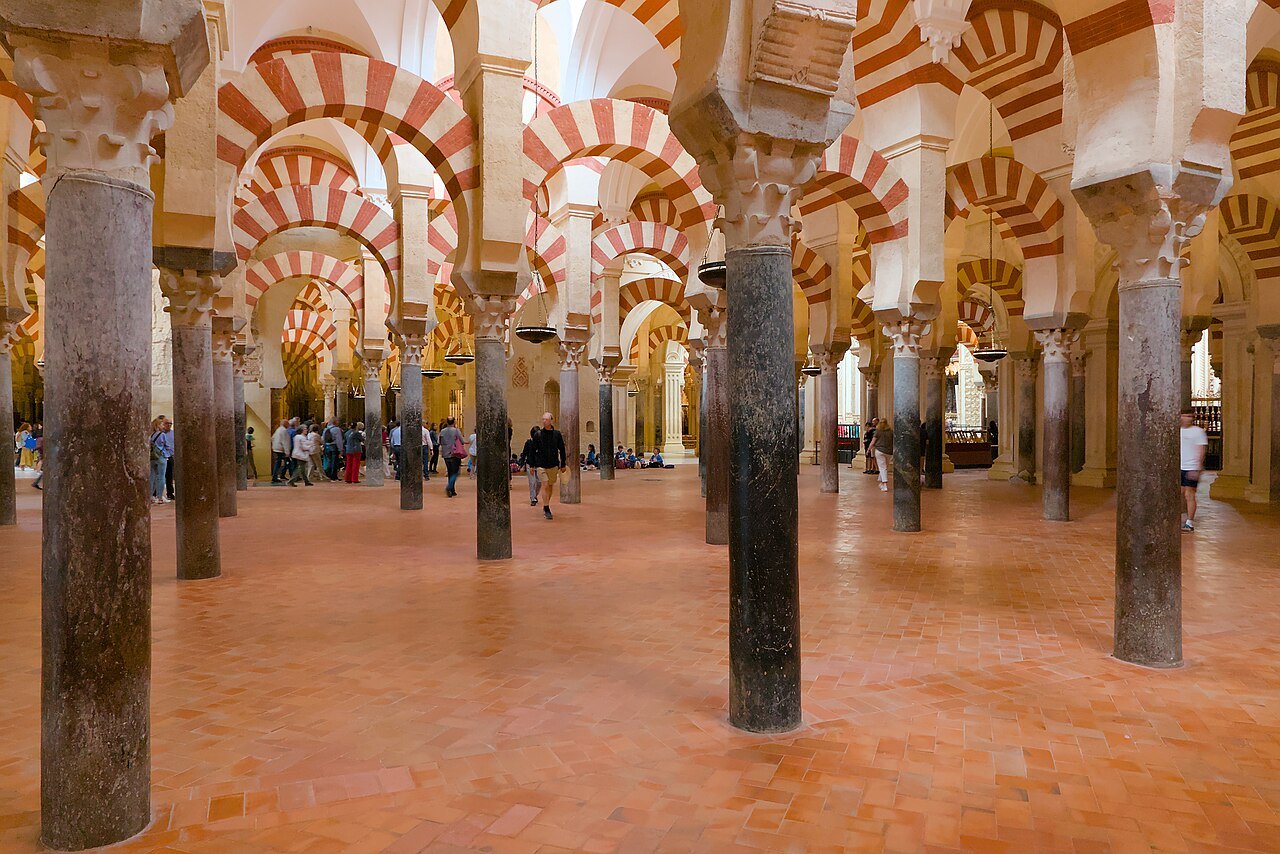
1 · Abd al-Rahman I, from 785. The first mosque, eleven aisles running south toward the river. Its architects had a problem: the columns available to them were short. Their solution is the thing everyone photographs — a second tier of arches carried on piers above the first, so the roof could be lifted far higher than a single arcade allows.
2 · Abd al-Rahman II, from 833. The city was growing and the mosque was extended straight south, repeating the system without changing it.
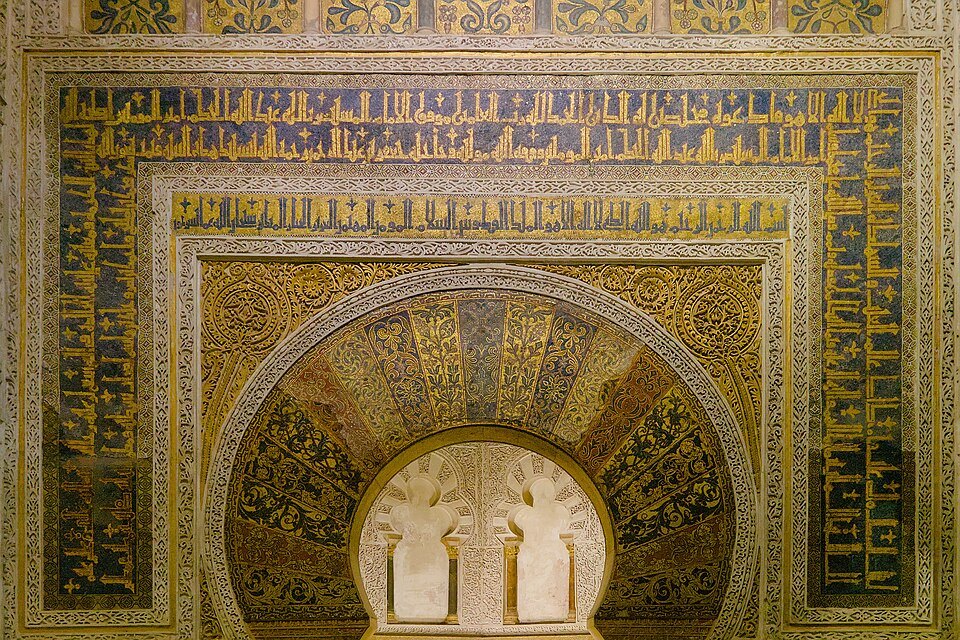
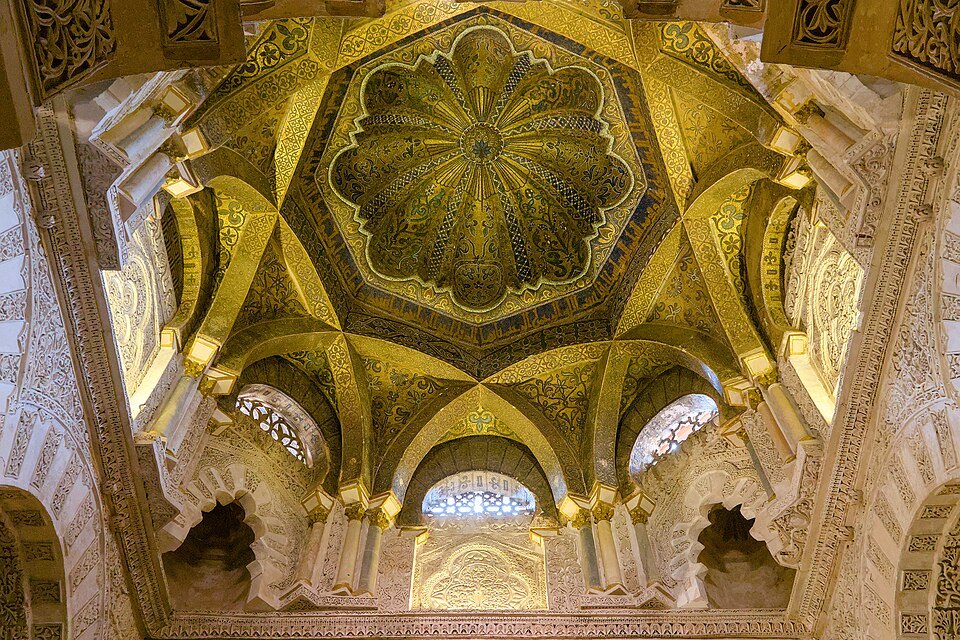
3 · Al-Hakam II, from 961. The most lavish phase. It pushed south again and added the mihrab and the maqsura, the enclosure where the caliph prayed. Here the builders stopped repeating themselves: the arches interlace, and the domes are carried on ribs that cross without meeting in the centre — a structural idea centuries ahead of anything comparable in Europe.
4 · Almanzor, from 987. The last extension could not go south — the river was in the way — so it went east, widening the building by eight aisles. ⭐ This is why the mihrab is not in the middle of the south wall. Stand in front of it and you are standing off-centre in the finished building, which is the clearest evidence of the sequence you can see without a plan.
What you are actually looking at
The columns. Over 800 remain. Many are spolia — Roman and Visigothic shafts and capitals taken from older buildings and reused, which is why they do not match. Look at the capitals as you walk: the variety is not decorative, it is salvage.
The arches. Horseshoe below, semicircular above, and the voussoirs alternate pale stone with red brick. That two-tone banding is the motif this whole site is drawn from.
The mihrab. Faced in gold mosaic, and the chronicles record that the craftsmen were sent by the Byzantine emperor. ⚠️ That detail comes from the written sources rather than from anything on the wall, and it is repeated so confidently elsewhere that it is worth saying where it comes from.
The tower. The bell tower is built around the earlier minaret rather than replacing it — the same habit of encasing what was already there.
1236, and 1523
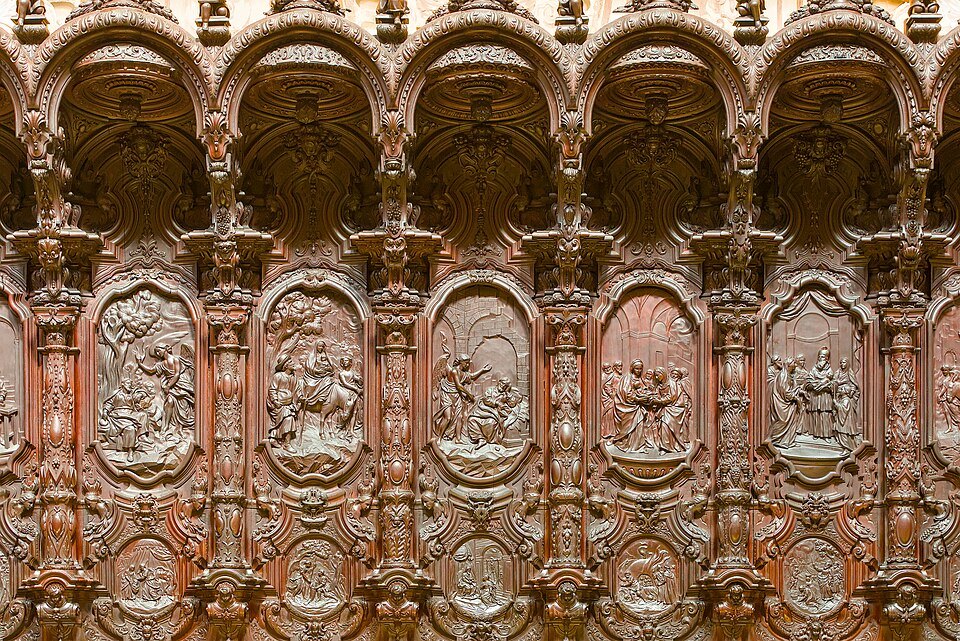
Ferdinand III took Córdoba in 1236 and the mosque was consecrated as a cathedral. For nearly three centuries it was used as one with relatively little structural change — chapels were added around the edges, but the hall was left standing.
In 1523 the cathedral chapter began a nave in the middle of it. The city council opposed the work. ⚠️ Charles V is traditionally said to have regretted approving it, in a remark about destroying something unique to build something ordinary — the story is repeated everywhere and is not securely documented, so treat it as the legend it probably is.
What stands now is both buildings at once. The nave is a serious piece of architecture in its own right; it is also unmistakably an interruption. Judging it is easier once you have walked the four campaigns first.
Getting in without the crowd
⭐ There is a free early window on weekday mornings, published by the cathedral chapter. It is the least crowded the building gets and it costs nothing.
⚠️ It is a working cathedral. Services close sections without notice, and the bell tower is ticketed separately and timed. The operator publishes both.
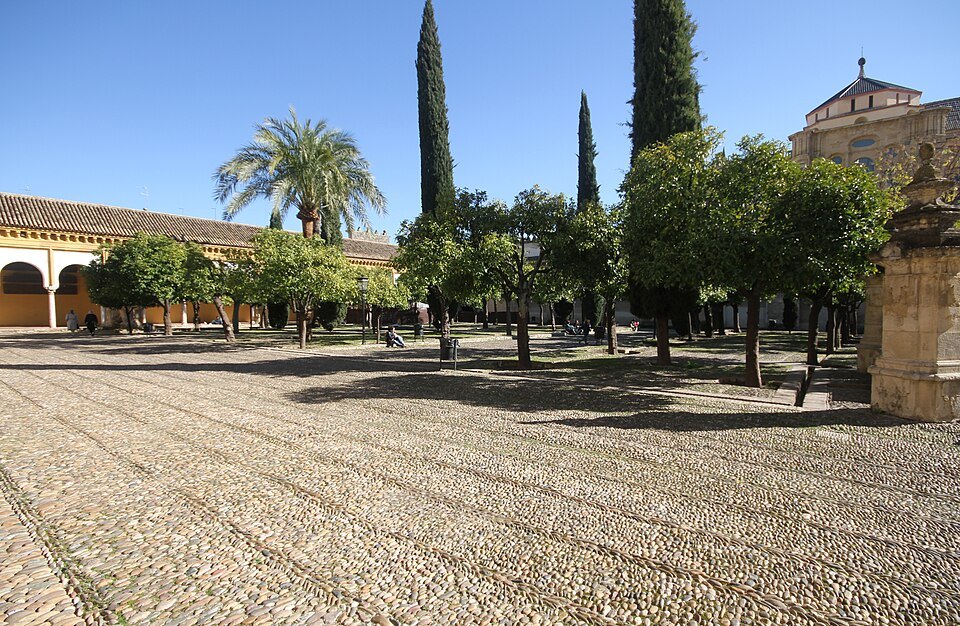
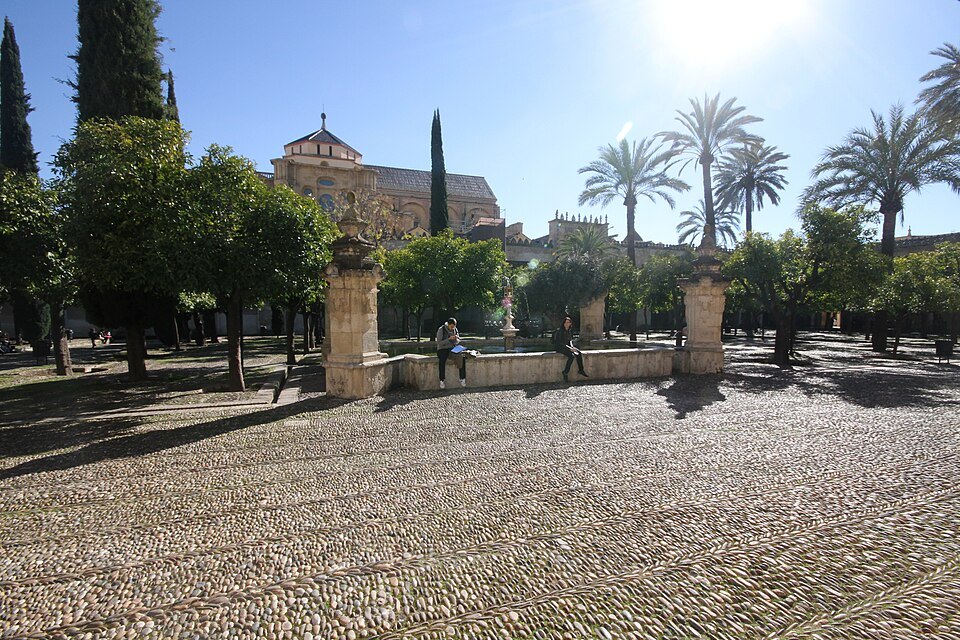
The Patio de los Naranjos is free at any time and is the same idea in the open air — the orange trees are planted on the grid of the columns inside. Do it as well, not instead.
On calling it the biggest mosque
It is often described that way and the description does not hold up. It was among the largest mosques in the world when Almanzor finished with it, and it remains one of the largest buildings of its kind to survive — but it is not the largest mosque today, and it has not been a mosque since the 13th century.
Islamic prayer inside it is not permitted. Requests to allow it have been made and refused, and the question resurfaces periodically along with an argument about how the building is named and marketed. This site records that the dispute exists rather than taking a side in it.