How Córdoba became a capital
Muslim forces crossed into Iberia in 711 and within a few years most of the peninsula was under Muslim rule. Córdoba became its administrative centre — at first a province governed from Damascus.
That changed in 756. When the Abbasids overthrew the Umayyad caliphs and killed the family, one survivor, Abd al-Rahman I, made his way across North Africa to Iberia and established an independent emirate with Córdoba as its seat. The mosque he began in 785 is the physical expression of that: a dynasty in exile building its own capital.
The caliphate
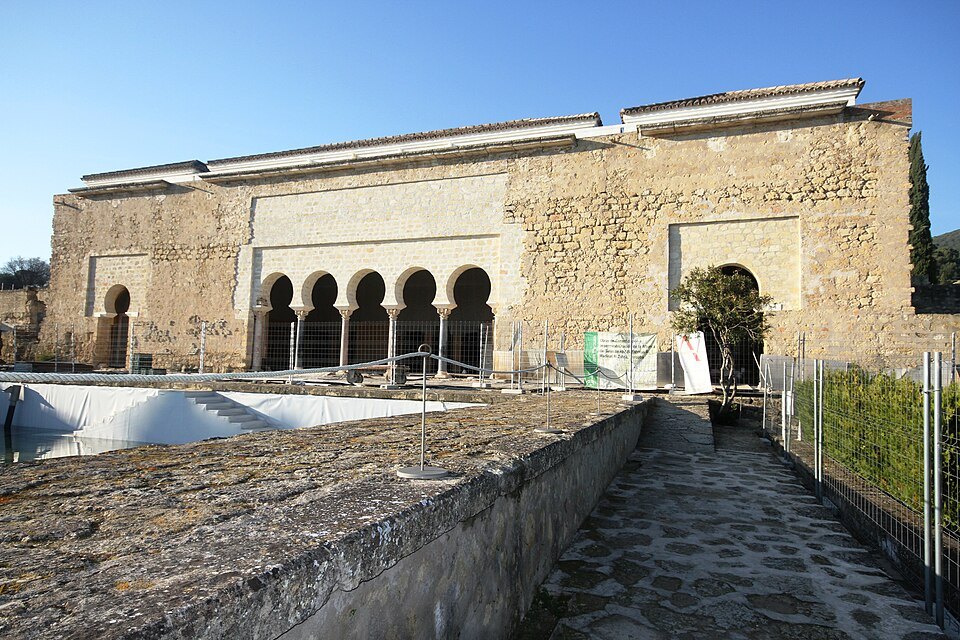
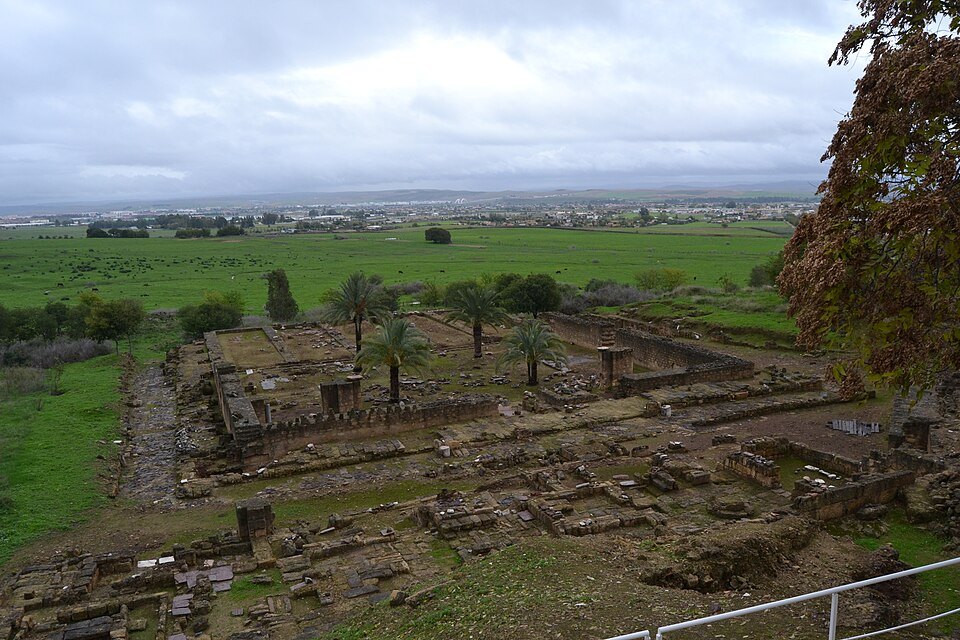
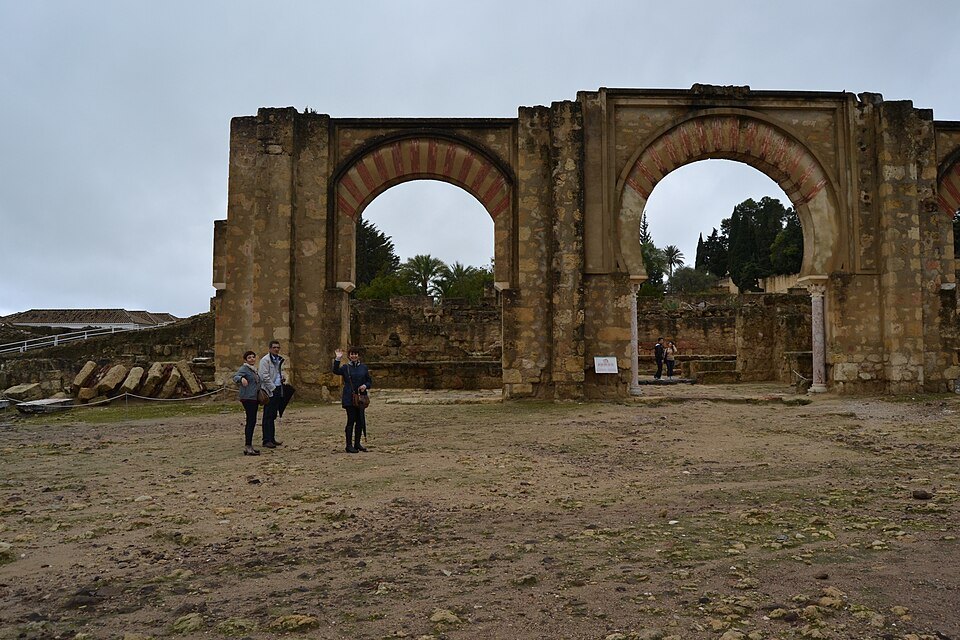
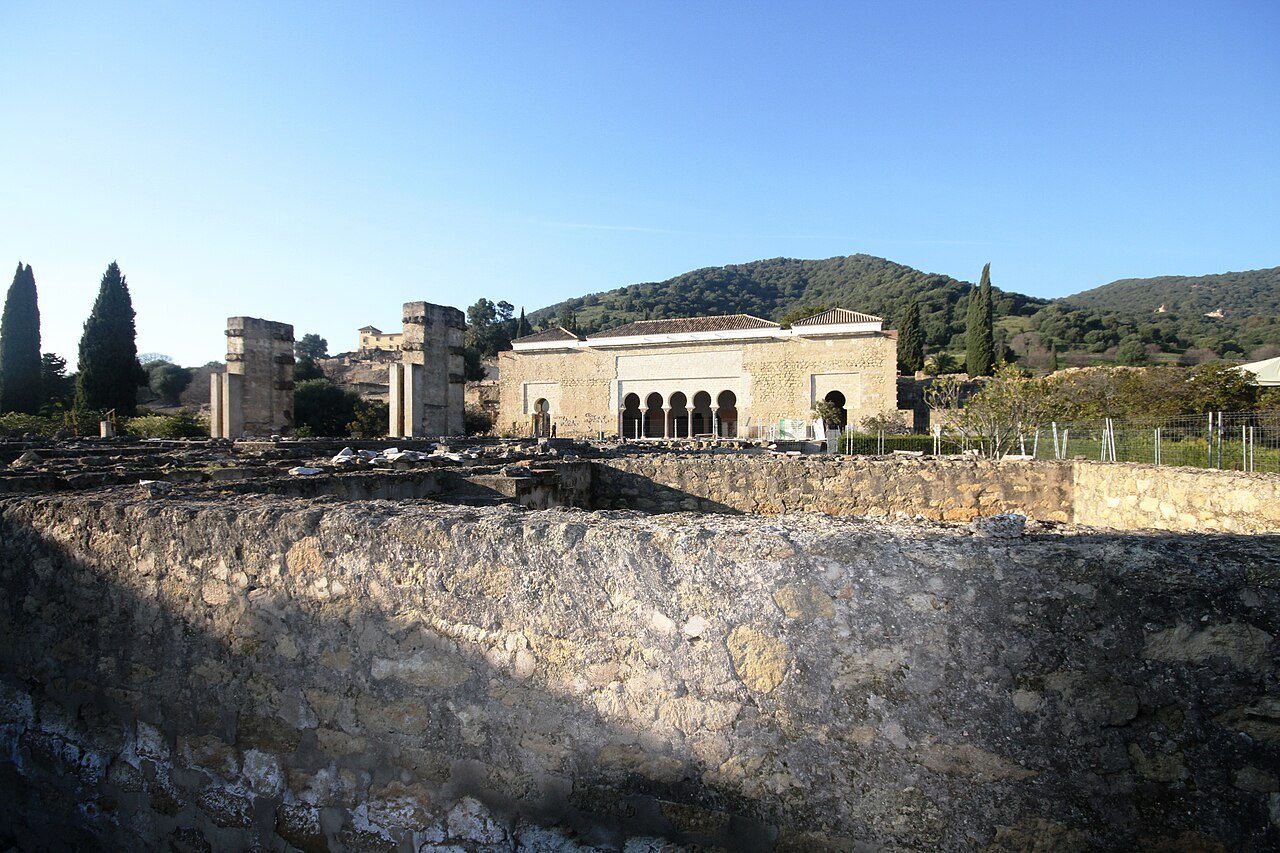
In 929, Abd al-Rahman III declared himself caliph — a direct claim to lead the Islamic world, against the Abbasids in Baghdad and the Fatimids in North Africa. Córdoba was now a caliphal capital, and it built like one. Medina Azahara, begun in 936, was a new seat of government raised from nothing outside the city.
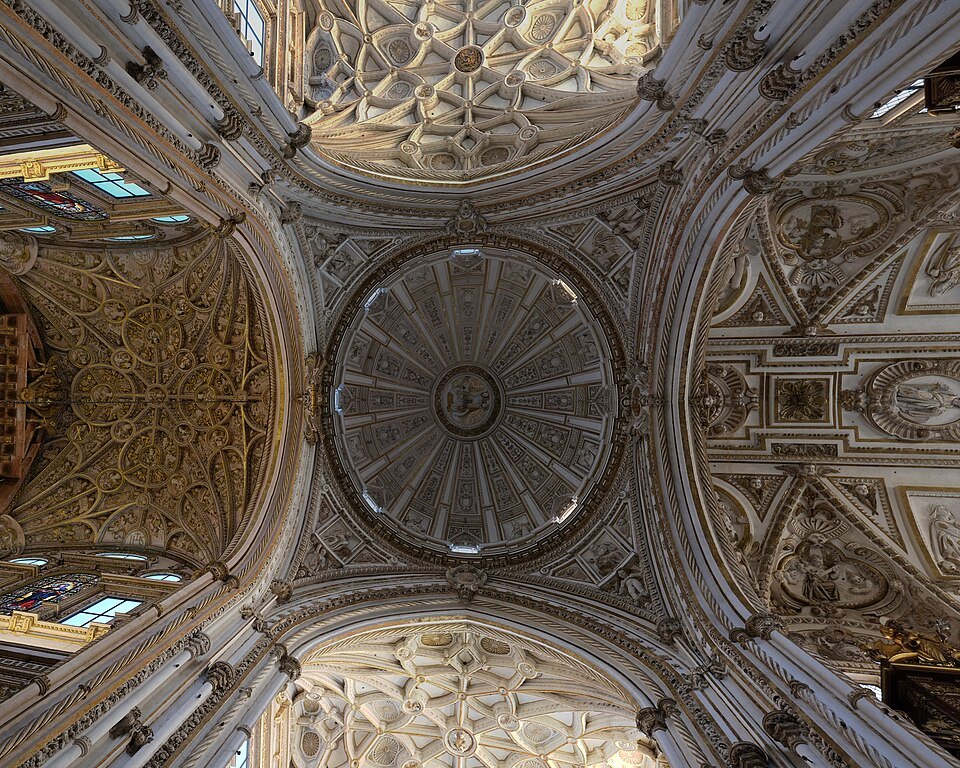
Under his son al-Hakam II (961–976) the city was at its most learned. He extended the mosque, added the mihrab, and assembled a library that the sources describe as enormous. ⚠️ The figure usually quoted is 400,000 volumes. It comes from the chronicles, it cannot be checked, and it is repeated as fact far more often than it is qualified — so treat it as what the sources claim rather than what is known.
⚠️ The same caution applies to population. Estimates for 10th-century Córdoba range from around a hundred thousand to half a million, and historians disagree sharply. What is not disputed is that it was among the largest cities in Europe and probably in the world.
How fast it ended
After al-Hakam II, real power passed to his chamberlain Almanzor, who ruled in the caliph's name until 1002 and made the mosque's last and largest extension.
Then it collapsed. Civil war — the fitna — broke out in 1009. Medina Azahara was sacked around 1009–1010, less than seventy years after it was founded, and quarried for stone afterwards. The caliphate was formally abolished in 1031 and al-Andalus broke into small taifa kingdoms. Córdoba never recovered its position.
Ferdinand III of Castile took the city in 1236. From capital of a caliphate to provincial town took about two centuries.
The people the city produced
Ibn Hazm (994–1064), poet and jurist, wrote The Ring of the Dove on love and lived through the civil war that ended the caliphate.
Al-Zahrawi (Abulcasis, died in the early 11th century), a physician whose surgical writing was translated into Latin and used in European medicine for centuries.
Averroes — Ibn Rushd — born here in 1126. His commentaries on Aristotle reached Latin Europe and changed what could be argued in it. He died in Marrakesh.
Maimonides, born here in the 12th century, left as a child when the Almohads took the city and wrote his major work in Egypt. ⚠️ His birth year is given as 1135 or 1138 depending on the source; this site does not pick one.
⚠️ Both Averroes and Maimonides are claimed enthusiastically by the modern city and both left it. That is worth knowing before you read the statues.
On the three cultures
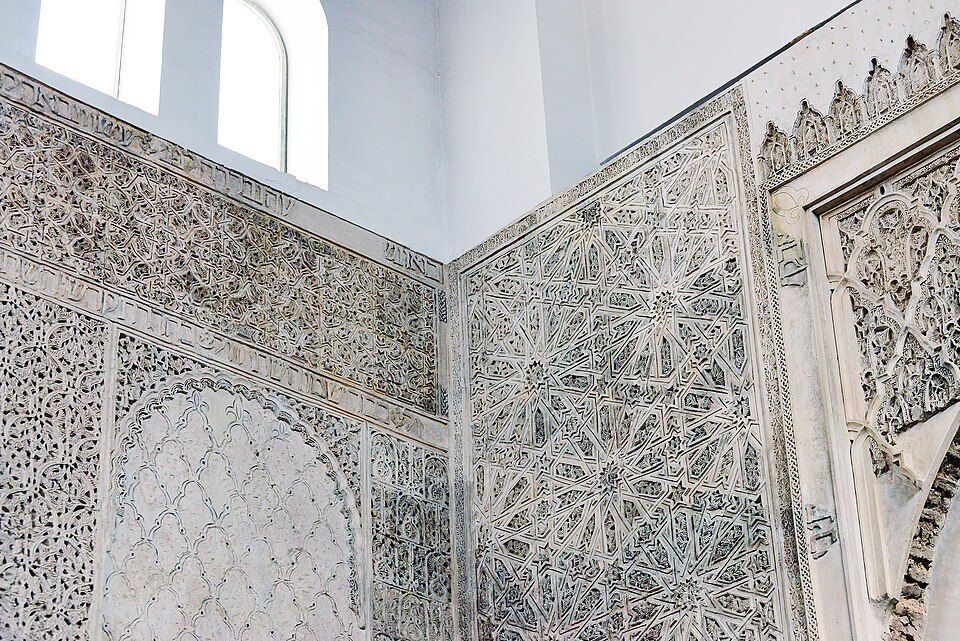
Córdoba is often presented as a model of convivencia — Muslims, Jews and Christians living together productively. There is something real underneath it: the city did sustain scholarship across all three communities, and the synagogue and the mosque were built by overlapping traditions of craftsmen.
⚠️ But historians argue about how far the word can be pushed. Non-Muslims held a defined and subordinate legal status, periods of tolerance alternated with periods of persecution, and the Almohad takeover in the 12th century drove out both Maimonides' family and much of the Christian population. The tourist version flattens all of that. The city is remarkable enough without it.
Where to see the layer
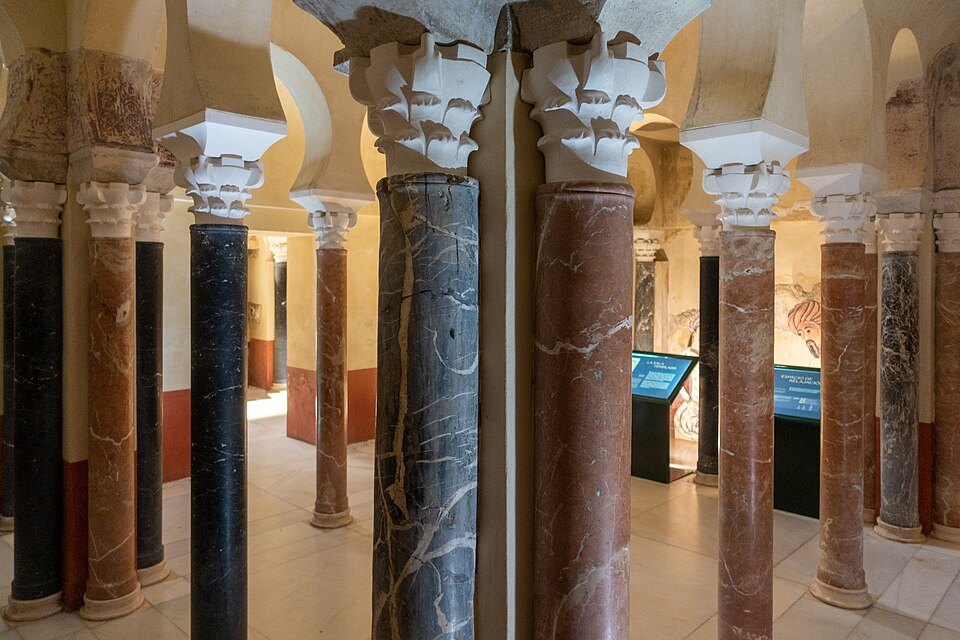
The Mezquita first. Then the caliphal baths, the ruins at Medina Azahara, and the archaeological museum, where the loose material ended up and where the sequence finally makes sense.