Walking through an open door into a stranger's courtyard feels like trespassing, even when a hand-painted sign says otherwise. It isn't. Córdoba's patios have a long tradition of being shown off, not hidden, and a huge amount of the city's identity rests on residents opening their front doors to total strangers. But there's a right way to do it, and a handful of ways visitors get it wrong every single day, usually without realizing.
How to tell if a patio is actually open to you
Not every courtyard with greenery is a public attraction, and not every closed door means "no." The clearest signal is the door itself: if it's propped open, often with a small chain or iron grille (a cancela) across the gap rather than a solid door, that's an invitation. You can see through the grille into the courtyard beyond — that's the whole point of the design, letting air and light move through the house while keeping it secure. A cancela pulled shut and latched, even if you can see flowers through it, means private, not now.
During the Patios Festival in May, the city makes this easy: participating houses are numbered, mapped, and signposted, and the owners are expressly ready for a flow of visitors. Outside festival dates, a smaller number of patios still keep regular hours as informal year-round attractions, mostly concentrated in the San Basilio quarter and scattered through the old Jewish and Roman quarters near the Judería. ⭐ If you're unsure whether a patio is one of these, look for a small ceramic plaque or a laminated sign near the door — real residences that welcome visitors almost always mark themselves, precisely so strangers don't have to guess.
What to actually do once you're inside
These are homes. People live upstairs, hang laundry from the balconies, and keep the household's actual life just out of sight of the courtyard. The patio is the public face of a private building, a space designed over centuries to be looked at — but the rooms around it are not. Resist the urge to peer through interior doorways or windows, even when they're ajar.
- Keep your voice down. Courtyards are acoustic chambers by design — that's partly why they work as cooling systems — and a loud conversation carries straight up to the bedrooms.
- Ask before photographing a person. Plenty of owners sit near the door, sometimes selling lemonade or a small craft, and are glad to chat about which plants are decades old. Photographing them without a word first is the single most common complaint you'll hear from patio owners themselves.
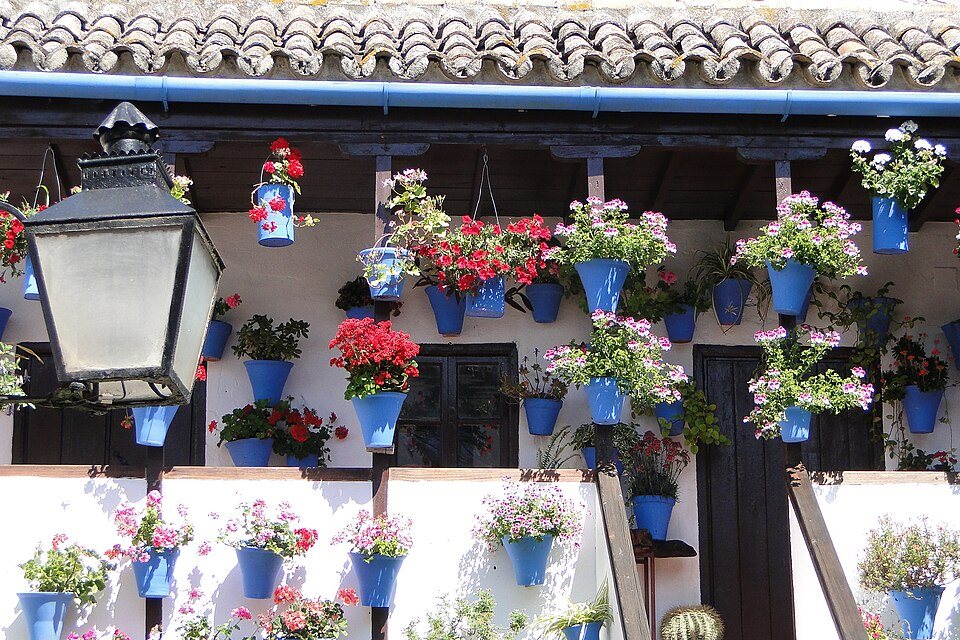
- Don't touch the pots. The geraniums, aspidistras, and ferns crowded onto the walls are often arranged by a logic the owner has refined for years, sometimes passed down a generation. Moving one to get a better photo angle is a real, recurring problem.
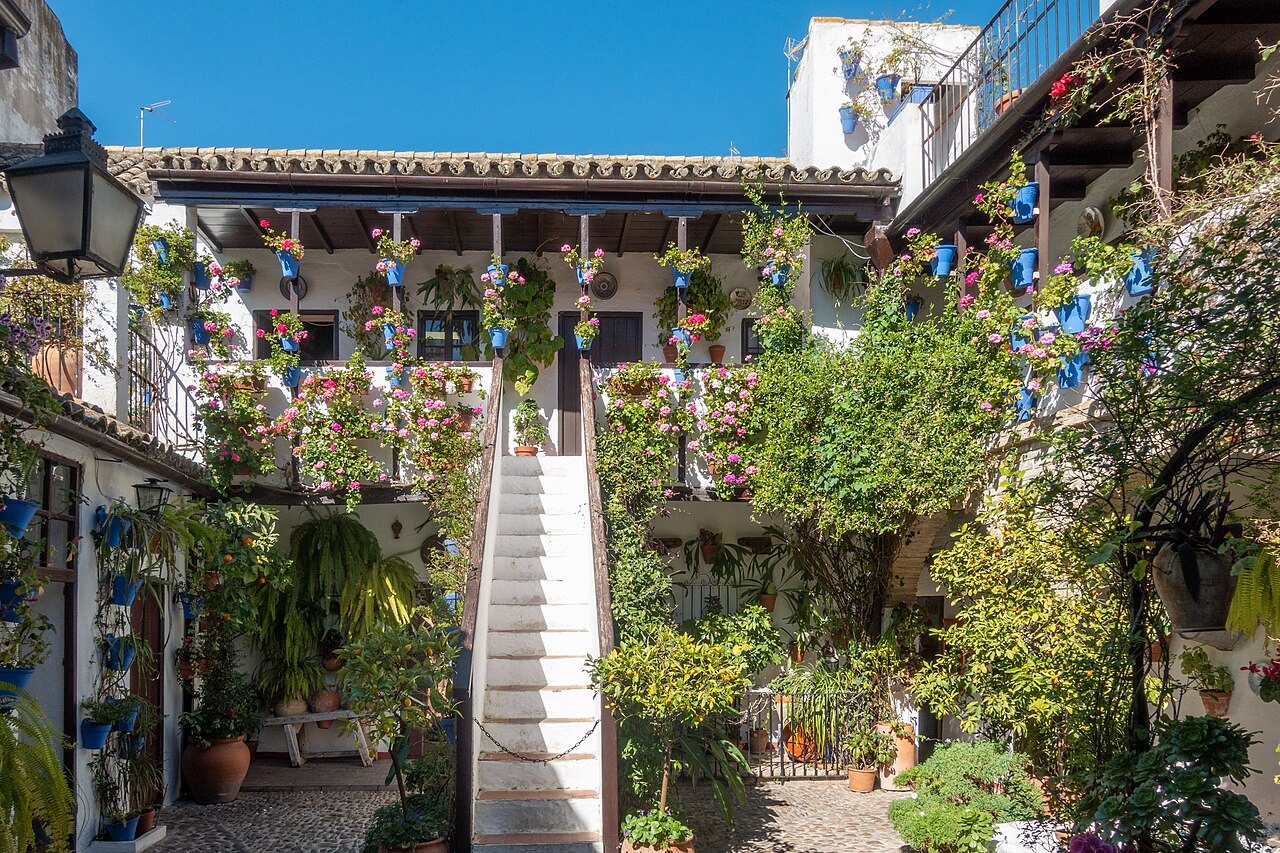
- Mind the floor. Many patios have cobbled or pebble-mosaic paving (empedrado) that's uneven and can be slick when the owner has just watered the plants — which happens often, since Córdoba's summer heat means watering twice a day isn't unusual.
⚠️ During the festival, queues form outside the most photographed patios, and it's tempting to linger once you're finally inside. Owners generally tolerate a few minutes, not twenty; if there's a line behind you, take your photos and let the next group in.
Tipping, buying, and saying thank you
Most residents who open their patios during the festival do it for pride and tradition, not income — many have entered the same courtyard in the competition for years and clearly enjoy talking about it. Still, a tip jar or a small donation box near the door is common, and dropping in a coin or two is a normal courtesy, not an obligation written down anywhere. Some households sell postcards, small ceramics, or homemade sweets from a table by the entrance; buying one is a good way to make the visit feel like an exchange rather than a one-way inspection.
If the owner is nearby and in a talking mood, ask about the plants or the house's age rather than snapping photos and moving on. Many of these courtyards sit inside buildings with Roman or Islamic-era foundations, reworked many times over, and the person tending the geraniums usually knows the layered history of their own walls better than any plaque would tell you.
Beyond the festival
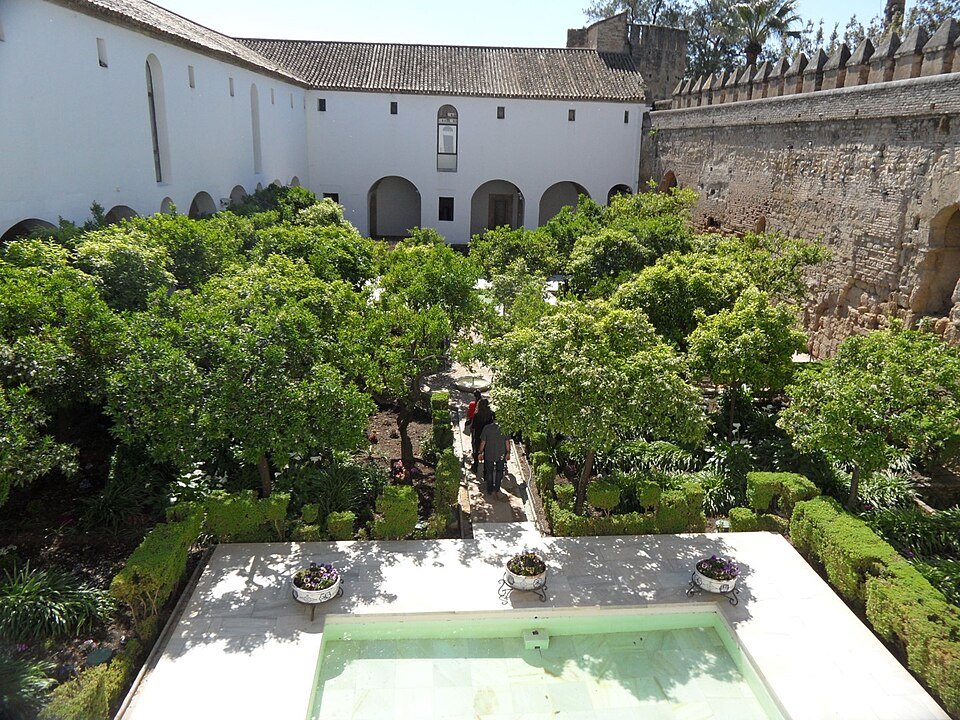
If you're in Córdoba outside the festival dates and want the courtyard experience without knocking on strangers' doors, several historic buildings maintain patios on a regular schedule, with normal entry arrangements through their own ticketing. The Alcázar de los Reyes Cristianos has formal, Moorish-influenced gardens built around water rather than the small domestic courtyards of San Basilio, which is a different, grander version of the same idea. The Palacio de Viana is probably the single best stand-in for the full patio experience if you can't be in Córdoba for the festival itself — it holds a dozen courtyards under one roof, each landscaped differently, and it's set up explicitly for visitors, so none of the etiquette questions above apply there in the same way.
For residential courtyards, the short version is simple: an open cancela is permission, a closed one is a wall. Speak quietly, photograph plants more than people unless you've asked, and remember that the reason these patios still exist for anyone to see at all is that generations of Cordoban families decided to keep doing this, year after year, for no better reason than that it's worth doing. Treat the visit as a favor extended to you, because that's what it is. For more on where the festival patios cluster and how to plan a route between them, see our guide to San Basilio's patios, and for a wider walking plan through the old quarters, check itineraries.
In pictures