By the middle of the 12th century, Córdoba had already lost the thing that made it extraordinary: it was no longer the seat of a caliphate, just one more city squabbling in the wreckage of the taifa kingdoms, then a provincial capital under the Almoravids, a Berber dynasty from Morocco. In 1148 a second wave from the Maghreb arrived to replace them. The Almohads took the city, and the change in who held power here rippled through who was allowed to stay.
From reformers in Morocco to rulers in al-Andalus
The Almohads began as a religious reform movement founded by Ibn Tumart in the Atlas Mountains, built around a strict reading of Islamic doctrine and a rejection of what its leaders saw as the laxity of the Almoravid court. Having consolidated power across the Maghreb, Almohad armies crossed into al-Andalus in the 1140s, taking Seville in 1147 and Córdoba not long after, in 1148. For Córdoba this was the third change of regime in less than a century, and it would prove more disruptive to daily life than the sack by Castilian raiders or the fitna that had splintered the caliphate decades before.
What distinguished the Almohads from the dynasty they displaced was not just military organization but doctrine. They governed as a reforming movement with a program, and that program had consequences for anyone in Córdoba who wasn't a Muslim practicing it their way.
A harder line, and who packed up
Accounts from the period describe Almohad policy toward Jewish and Christian subjects as considerably less accommodating than what had come before. Where earlier Muslim rulers in al-Andalus had generally taxed and tolerated their non-Muslim populations under long-standing arrangements, Almohad administrators are reported to have pressed communities toward conversion, and many chose emigration instead.
The clearest individual case is also the most famous: Moses ben Maimon, known to posterity as Maimonides, was born in Córdoba around 1138 and was still a boy when the Almohads took the city. His family left not long afterward, moving first within al-Andalus and then across the strait to Fez, and eventually to Fustat, near Cairo, where Maimonides built the career as physician, judge, and philosopher that made him one of the most consequential Jewish scholars of the Middle Ages. He did not leave Córdoba on a whim. He left because the city his family had known was no longer a place where staying was simple.
Córdoba's Mozarabic Christians — the Arabic-speaking Christian community that had lived under Muslim rule for generations, with its own clergy and customs — faced similar pressure, and emigration north to the Christian kingdoms picked up through this period. The city's Jewish quarter and its long history did not end in 1148, but the character of who lived there, and on what terms, changed.
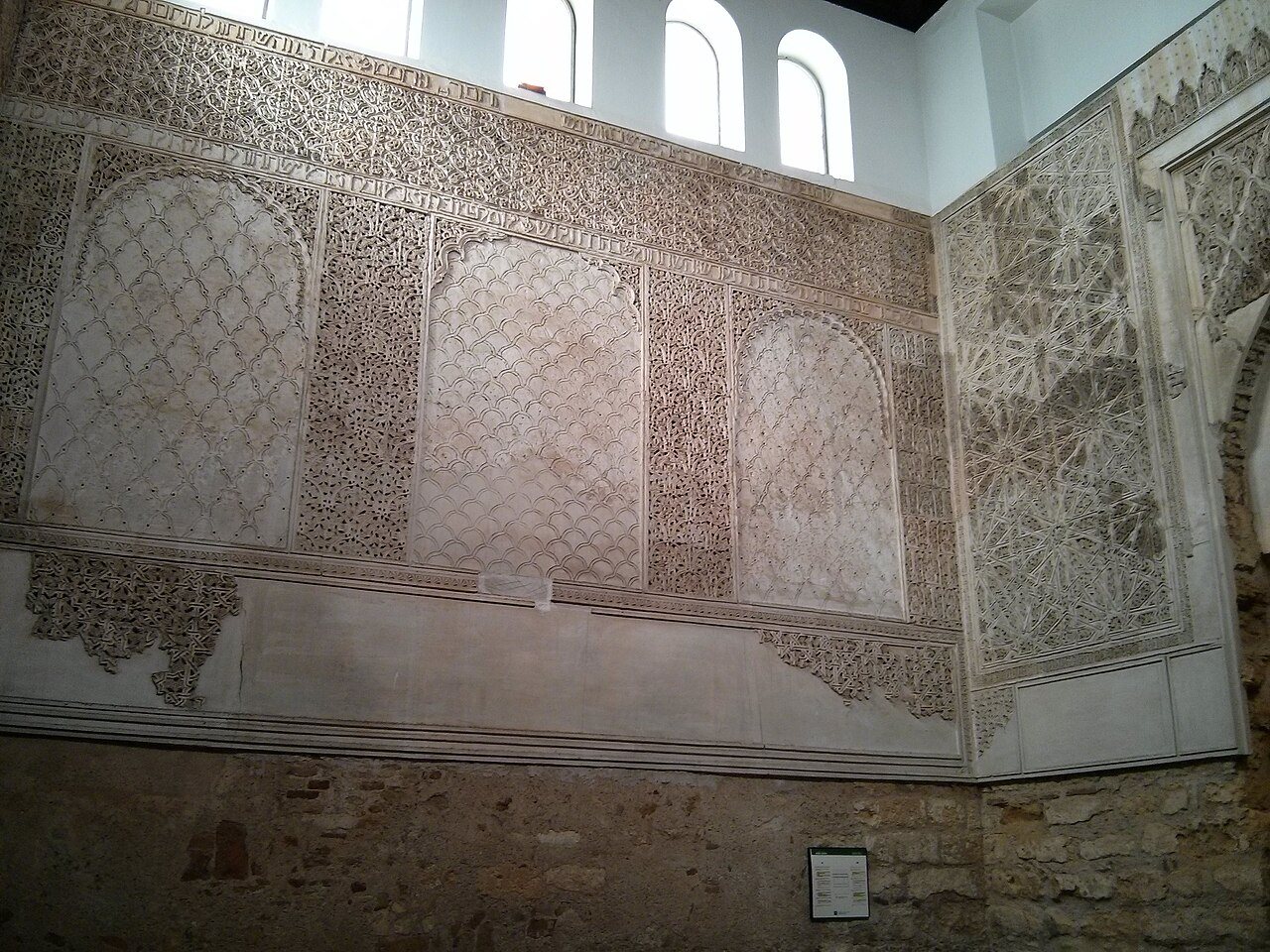
⭐ The synagogue that survives in Córdoba today dates from the 14th century, well after this episode, built when the Jewish community had re-established itself under Christian rule. It documents a later chapter, not the Almohad one — worth knowing before you go, so you're not looking for the wrong century on the walls.
Not everyone left, and not right away
It would be a mistake to picture Córdoba simply emptying out. Averroes — Ibn Rushd, the Córdoba-born philosopher and physician whose commentaries on Aristotle would later shape scholastic thought across Christian Europe — worked for years under Almohad patronage, serving as a qadi and court physician in Córdoba and Seville. The relationship between Almohad rulers and Andalusi intellectuals was not static hostility; it included real periods of patronage. But it was also unstable: late in his life Averroes fell out of favor with the Almohad court and was banished, a reminder that favor under this dynasty could be withdrawn as abruptly as it was granted.
Seville rises, Córdoba steps back
The more lasting blow to Córdoba was administrative rather than religious. The Almohads made Seville, not Córdoba, their capital in al-Andalus, and it was Seville that received the dynasty's major building campaigns and the attention of the court. Córdoba kept its great mosque, its bridge, its Roman-grid streets, but it was no longer where decisions got made. A city that had been the reference point for the Islamic West under the caliphate settled into a quieter, secondary role that it would not fully shake off even after the Christian conquest of 1236.
⚠️ If you go looking for Almohad-era building work inside the Mezquita-Catedral, you won't find much that's clearly theirs — the structure you see today is overwhelmingly the product of the Umayyad caliphal expansions and the later Christian cathedral insertions. The Almohads' major architectural statements went up in Seville, not here. Córdoba's physical fabric from this period is comparatively thin, which is itself a sign of how the city's priority had shifted.
What's actually left to see
Walking the old Jewish quarter near the mosque, it's worth remembering that its layout and its surviving monuments mostly reflect later centuries — Christian Córdoba's slow, partial attempt to rebuild a community that the Almohad period had scattered. The Alcázar down by the river belongs to an even later regime again, built after the Christian conquest on the site of earlier Muslim fortifications. None of these sites will hand you the Almohad interlude directly. What they hand you is the evidence of discontinuity: a city that kept getting rebuilt by whoever held it next, with each new power leaving some of the previous one's residents on the road out of town.
For a sense of how these layers stack up chronologically before you start walking, the al-Andalus section and the suggested itineraries are a reasonable place to orient yourself first.
In pictures