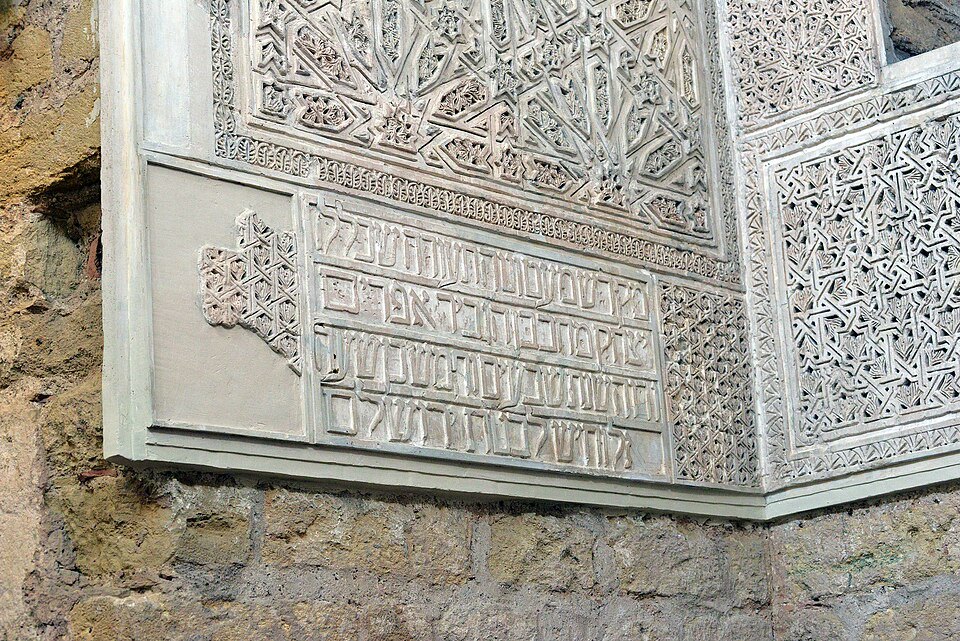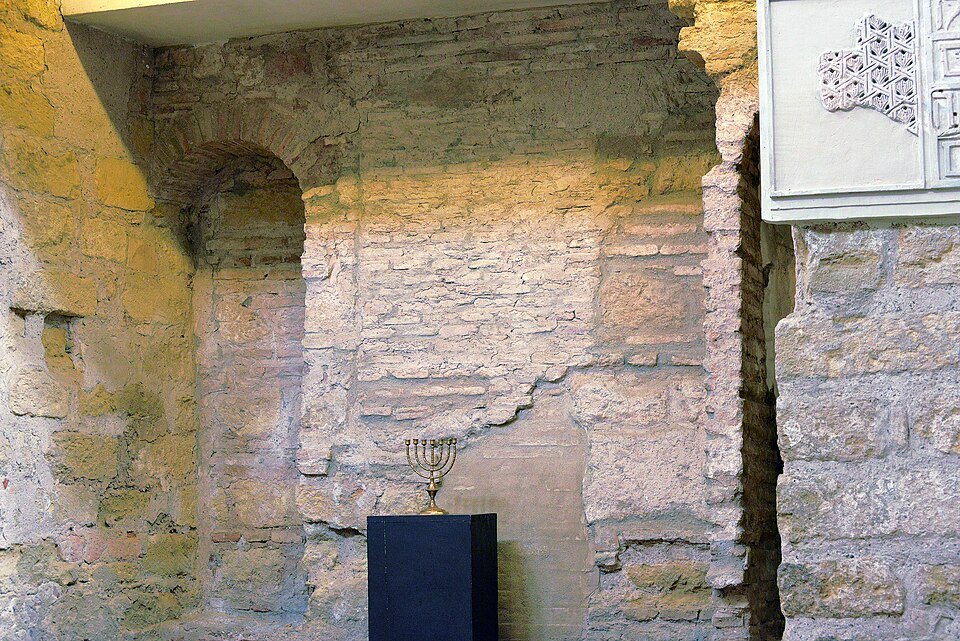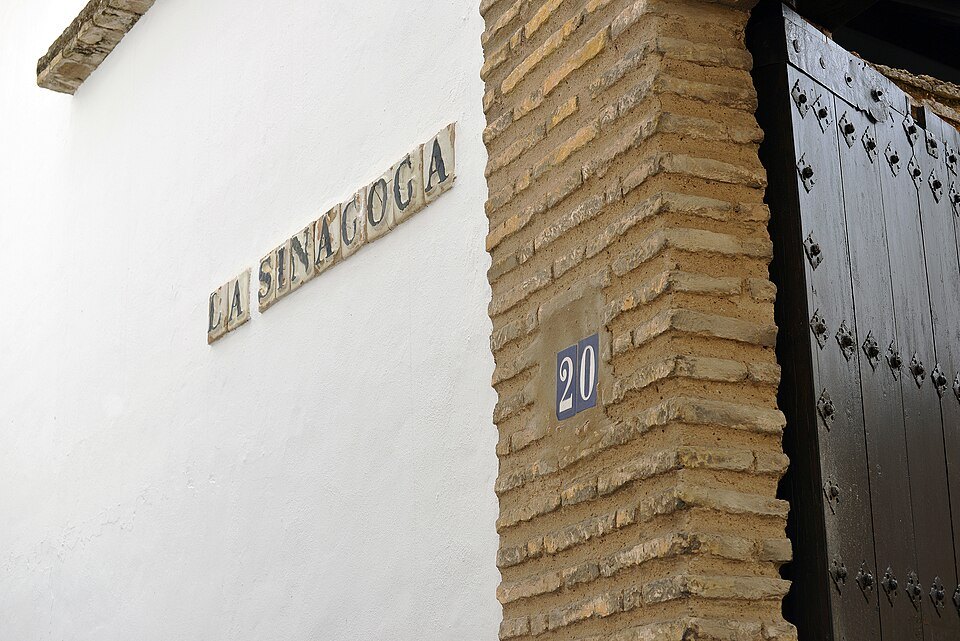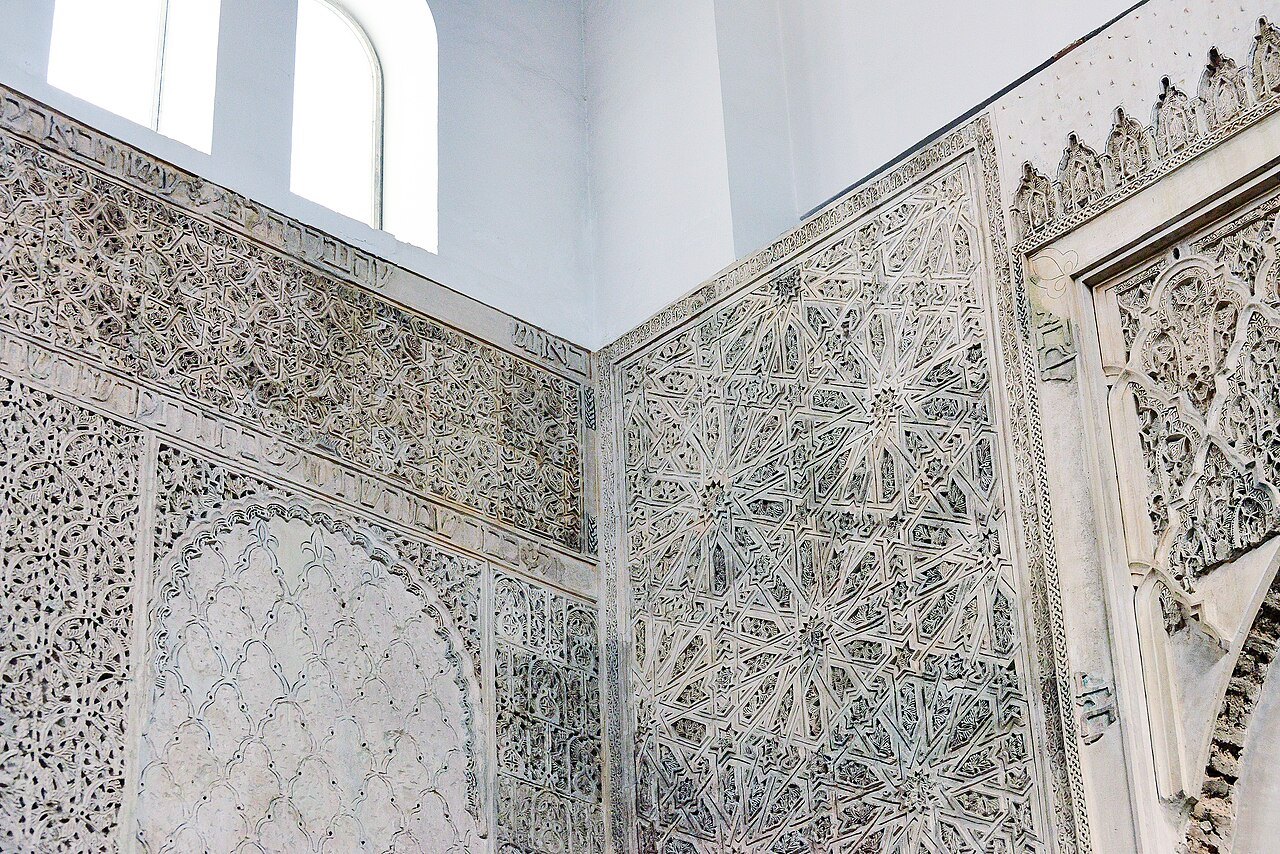
An inscription dates the building to 1315. After the expulsion of 1492 it was used as a hospital, then a chapel, then a school, which is how it survived at all — the great majority of Spain's medieval synagogues did not.
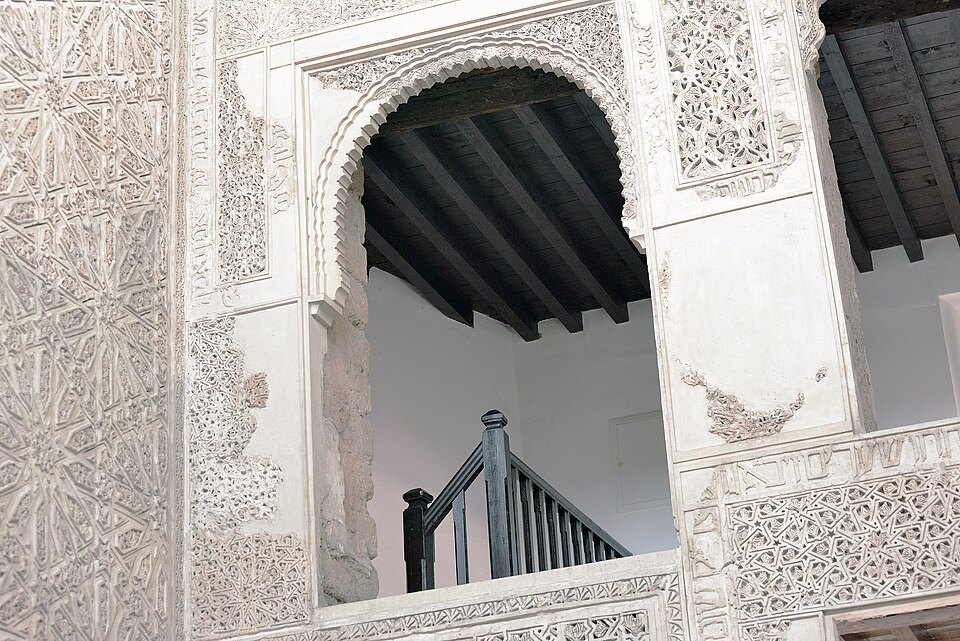
⭐ What is left is the decoration: Hebrew inscriptions and interlaced stucco running around the upper walls, in the same visual family as the Islamic work elsewhere in the city, because it was made by the same tradition of craftsmen.
It takes ten minutes to see and is worth the detour precisely because it is so small and so rare. Only Córdoba and Toledo have surviving medieval synagogues in Spain.
Our tip
Pair it with the Judería lanes around it rather than making a separate trip.
The Synagogue, photographed