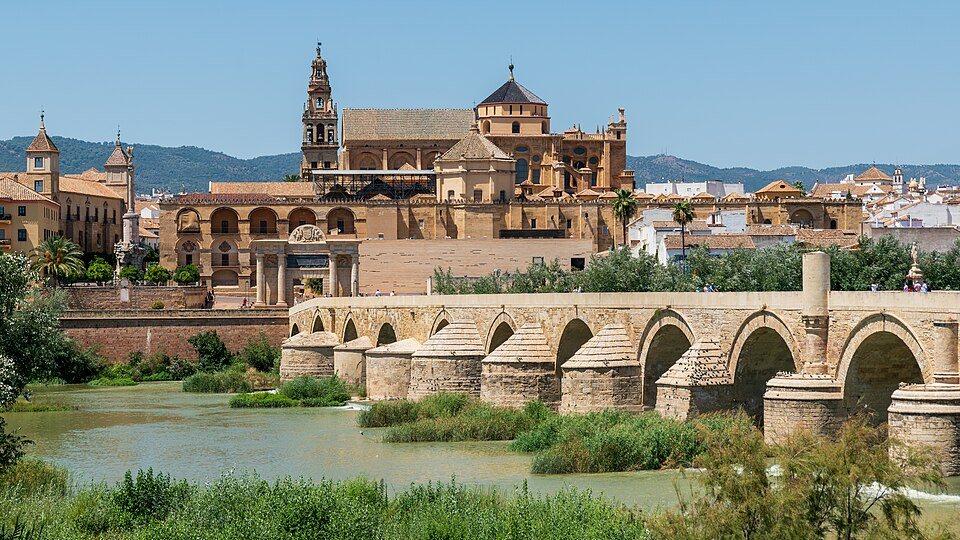
The synagogue on Calle de los Judíos is easy to walk past. It sits behind a plain doorway in a narrow street of whitewashed houses, no bigger than a large living room, with none of the scale or drama of the Mezquita-Catedral a few minutes' walk away. That modesty is part of the story. This building survived precisely because, for most of its existence, nobody thought it was worth tearing down or worth monumentalizing either. It just sat there, repurposed and half-forgotten, while almost every other synagogue in Spain was demolished, burned, or rebuilt out of recognition.
A near-total erasure
Before 1492, Jewish communities across Castile and Aragon maintained synagogues in most sizable towns. The Alhambra Decree of that year, which expelled Jews who would not convert, did not itself order the synagogues destroyed — but what followed did the job anyway. Buildings were seized, sold, converted into churches, torn down for materials, or simply left to collapse. Today only three medieval synagogues survive anywhere in Spain: this one in Córdoba, and two in Toledo — Santa María la Blanca and El Tránsito, both considerably larger. Everything else is gone, known only from property records, tax rolls, or the occasional wall fragment built into a later structure.
Córdoba's synagogue is the smallest of the three and, in some ways, the most intimate. An inscription on its wall gives a construction date in the early 14th century, which makes it a late addition even within the Jewish quarter's long history here — the community in Córdoba had already existed for centuries by the time this particular building went up.
The shoemakers who saved it
What kept this particular building standing was not protection or reverence. It was reuse. After the expulsion, the structure passed out of Jewish hands and was eventually taken over by Córdoba's shoemakers' guild, who converted it into a hermitage dedicated to Saint Crispin, the patron saint of their trade. A synagogue became a chapel. The Hebrew inscriptions on the walls were plastered over or simply ignored rather than chiseled out, which is, in hindsight, the single luckiest thing that happened to this building. Later it did service as a hospital ward and, for a time, as a school. None of these uses required architectural glory, and none of them required demolition either — the building was small, structurally sound, and good enough for whatever low-stakes purpose it was being put to. It survived by being useful in a minor way, century after century, to people who had no idea what it had originally been.
It was only in the 19th century that the Hebrew inscriptions were rediscovered under later plasterwork and the building was identified for what it was. Restoration followed in stages through the 20th century, and the structure was declared a national monument well before that work was complete — recognition arriving, as it often does with buildings like this, long after the accident of survival had already happened.
What to look for inside
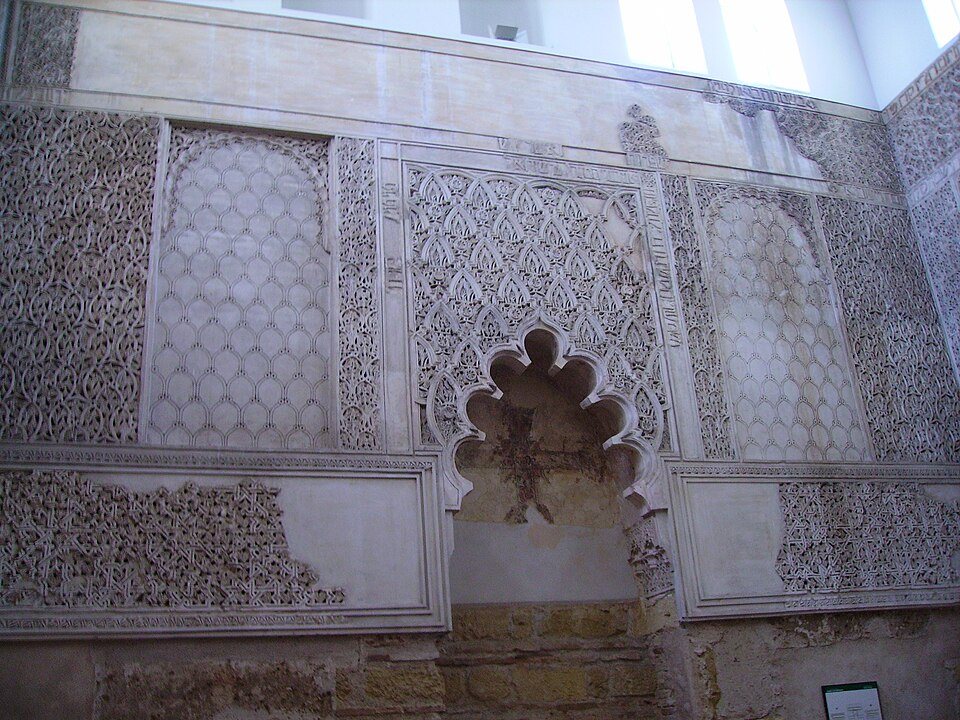
The interior is a single small square room with a women's gallery above, reached by its own stair, reflecting the separate seating that was standard in use. What draws people in is the upper-wall stucco: Mudéjar plasterwork combining geometric strapwork with Hebrew inscriptions, mostly verses from the Psalms, cut into bands around the walls. The style is the same decorative vocabulary used in Christian and Muslim buildings of the period in this part of Spain — the same craftsmen, in all likelihood, working across religious lines, which is a detail worth sitting with for a minute. There is nothing here on the scale of the Mezquita's mihrab or the Alcázar de los Reyes Cristianos's gardens. The whole point of this room is its proportion to an ordinary neighborhood congregation, not to a court or a caliphate.
⭐ Go slowly around the upper band of inscriptions rather than scanning the room as a whole — the stucco repays close, close-up looking far more than it rewards a glance from the doorway.
Visiting the synagogue today
The building is a managed site with restricted capacity given its size, and access generally runs through timed entry arranged on-site or in advance through Córdoba's municipal tourism office; check current arrangements before you go, since the mechanism for entry has changed more than once in recent years. ⚠️ Because the room is so small, groups are limited and it can fill up fast in high season — this is not a site you want to leave for the last hour before closing on a whim.
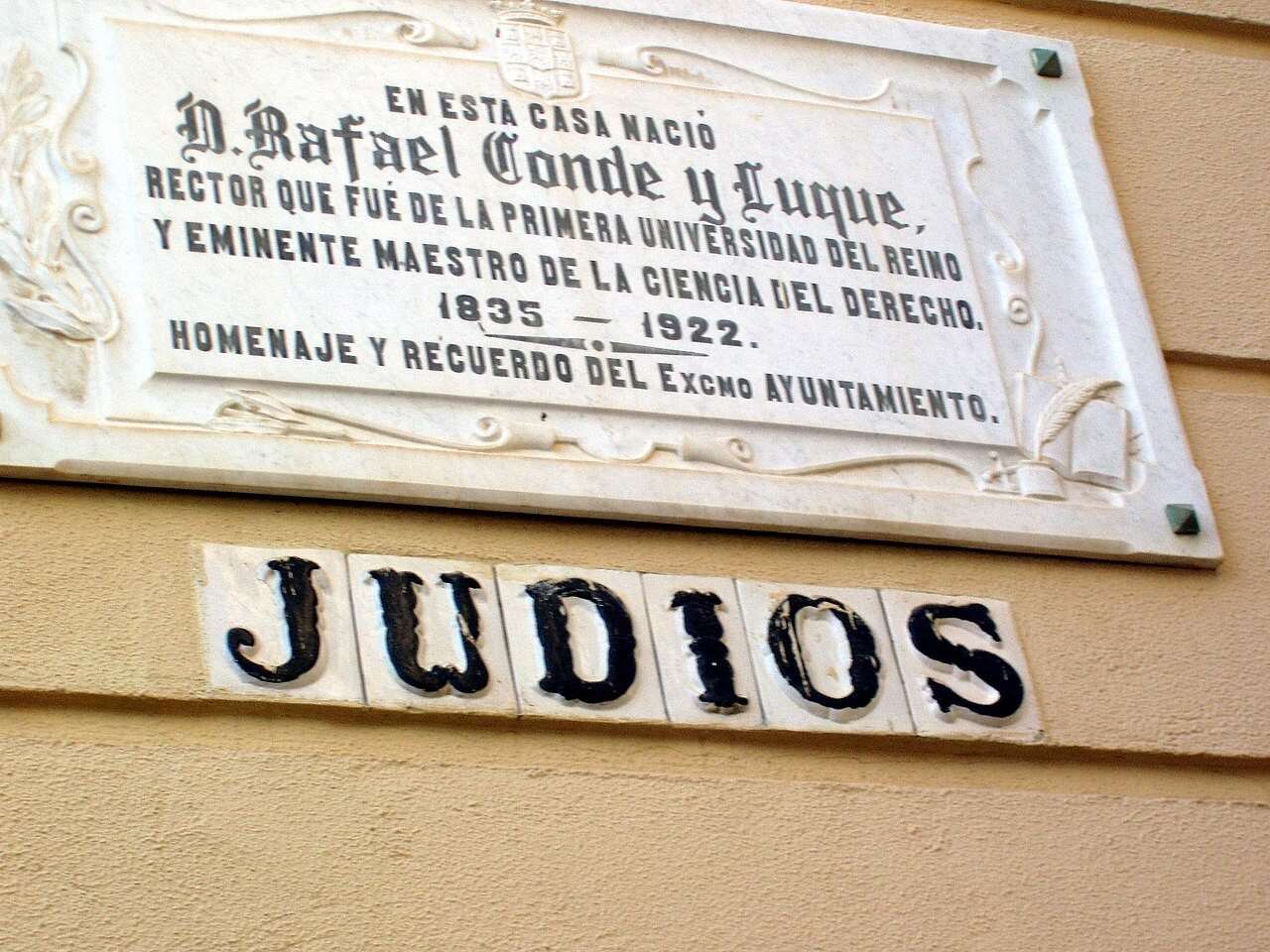
It sits within the wider Judería, Córdoba's old Jewish quarter, a tangle of narrow lanes that also holds the statue of Maimonides, souvenir shops selling filigree silver, and the approach to the Calleja de las Flores. The Museo Arqueológico is a reasonable next stop if you want more context on daily life in Córdoba across the centuries this building passed through unnoticed. None of these sights require much walking between them — the whole quarter is compact enough to cover on foot in an afternoon, which is covered in more detail under getting around.
The synagogue rewards a visitor who already knows the context going in, because the building itself, deliberately, gives almost nothing away. It looks like what it was for most of its life: a small room nobody was paying much attention to. That is exactly why it is still here.
In pictures