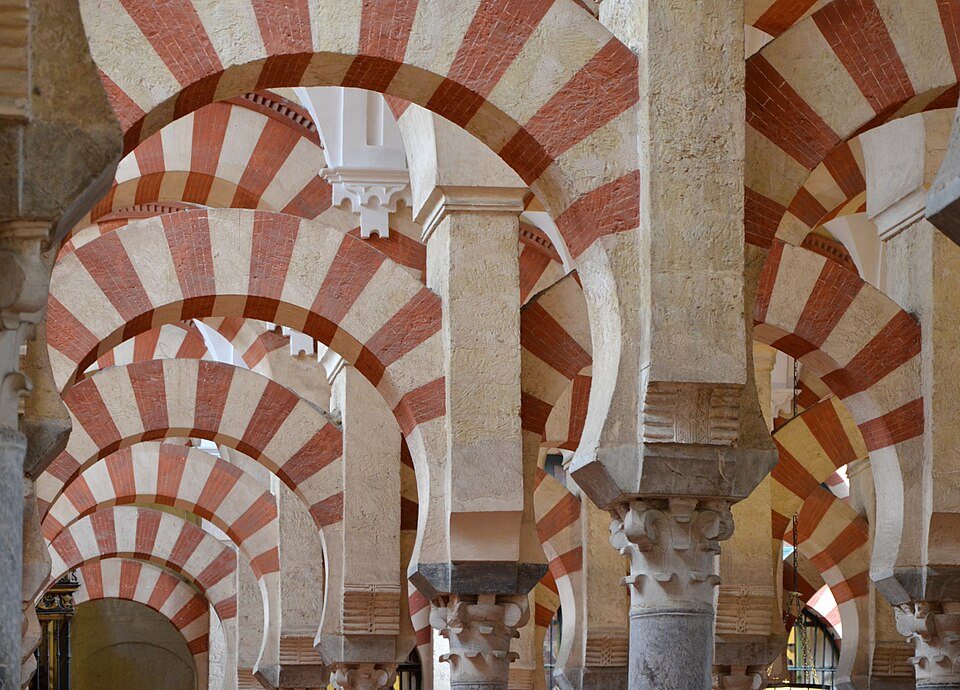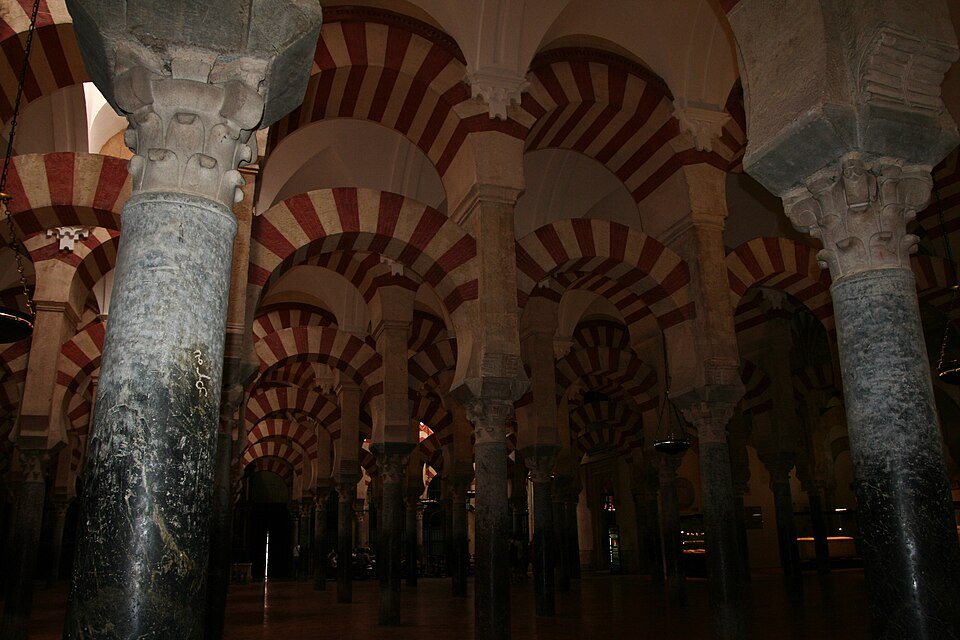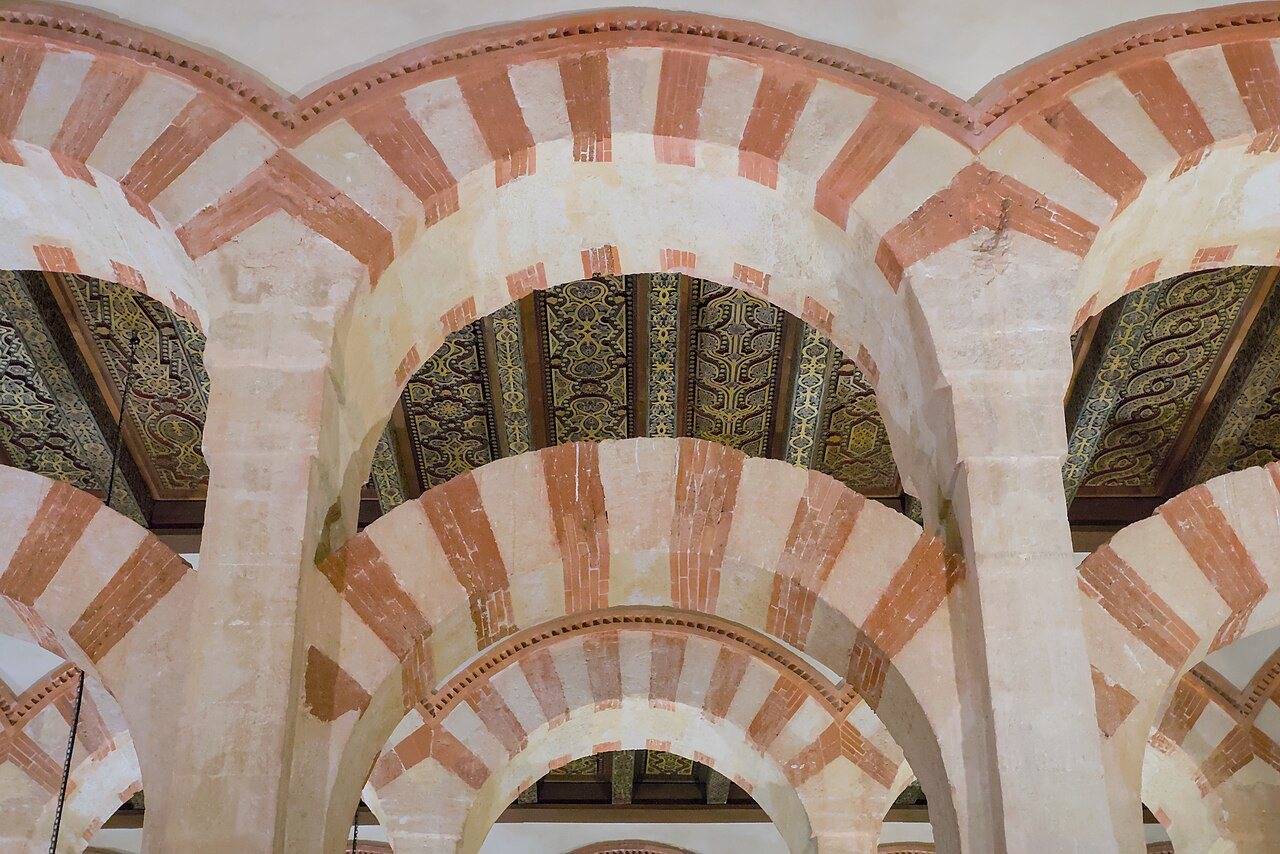
The Mezquita-Catedral photographs empty. Almost every picture you've seen of the striped double arches shows a single figure standing in the middle distance, or no one at all. In person, for most of the day, it is nothing like that. Tour groups move through in blocks of thirty or more, guides holding up numbered paddles, and the columns that look infinite in photographs start to feel more like a crowded parking structure with better lighting. None of this ruins the building. But it changes the experience enough that it's worth planning around, and there is one real workaround: a free entry window that exists because the building is still a working church.
Why the crowd bunches up
Córdoba sits on a day-trip axis between Seville and Granada, and the Mezquita is the reason most people stop. Coach groups tend to arrive in a fairly narrow midday band, timed to lunch and to onward travel, which means the worst crush isn't spread evenly across the day — it piles up. Add cruise-adjacent tour buses and the weekend traffic of Spanish domestic visitors, and the forest of arches nearest the main entrance can feel genuinely congested for a few hours in the middle of the day, less so at the edges. The building itself doesn't help spread people out: the central naves near the mihrab are the obvious draw, so that's where everyone converges, while the outer aisles and the northern end near the orange-tree courtyard stay comparatively open even when the center is packed. ⭐ If you can't come early, walk toward the edges of the hall rather than following the flow toward the center — the arches are the same arches everywhere in the hall.
The free early window — what it actually gets you
The Mezquita-Catedral is an active parish church, not only a monument, and it keeps a period each morning, before the ticketed visiting hours begin, when one door is opened for Mass and for anyone who wants to come in to look or pray. This isn't a secret side door or a loophole — it's long-standing policy — but it is not the same visit you'd get with a ticket. The sections nearest the mihrab and the roped-off chapels tend to stay closed off during this window, there's no audio guide or signage walk-through, and the areas connected to the bell tower and the treasury generally aren't part of it. Access is also framed as entry to a place of worship first, so behavior expectations are stricter than for a paid museum visit: no loud talking, no photography during Mass, and movement is more limited than a full circuit. What you do get is the thing the photographs promise: a long, mostly empty run of the striped arches, cool stone underfoot, and quiet enough to hear your own footsteps instead of fifty other pairs. It's a different building at that hour — slower, dimmer, closer to what a visitor in past centuries would have actually experienced. Because the window is tied to Mass schedules and can shift, check the current timing directly with the Mezquita-Catedral before you go rather than relying on any fixed hour you've read elsewhere. ⚠️ Don't assume the free window means the whole building is open — it's a fraction of the full visit, and the ticket office staff won't answer questions about it, since it operates under the parish, not the museum.
Making the ticketed visit less crowded anyway
If the early window doesn't fit your schedule, the next best lever is arrival relative to the ticket office's own daily rhythm rather than the clock on the wall — the quietest stretch of a normal ticketed day tends to be the first hour after opening and, less reliably, the hour before closing, since that's when the coach groups have either not yet arrived or have already moved on to lunch. Buying entry in advance, if the operator offers it, at least removes the ticket-line wait, which can be its own kind of crowd on a busy morning. Inside, resist the pull toward the mihrab immediately; it's the most photographed and most congested point in the building, and it will still be there in twenty minutes. Work the perimeter first. The transition from the arches out into the Patio de los Naranjos is worth treating as part of the visit rather than just an exit. The courtyard's orange trees are planted on the same grid as the columns inside, a detail that's easy to miss when you're focused on getting out into daylight, and the courtyard itself is far less crowded than the hall, since most groups treat it as a five-minute pass-through on the way to the bus.
What to do with the rest of the morning
Once you've seen the Mezquita-Catedral, the surrounding blocks reward slow walking more than a checklist. The Judería, the old Jewish quarter immediately north and west of the mosque-cathedral, is dense with narrow lanes that were laid out well before cars existed, and it's genuinely easy to get turned around in — which is more or less the point. The Puente Romano, a short walk south, gives you the classic view back across the river to the building's south wall and bell tower, and it's usually far less congested than the interior, especially in early morning light. From the far end of the bridge, the Torre de la Calahorra offers another angle back toward the old town, if you want the river between you and the crowds for a while. If you're building a full day around the visit, it's worth reading how the Mezquita fits into Córdoba's wider Islamic-era history before you go in, since the building's layout — the successive expansions, the later cathedral inserted into the center of the prayer hall — makes more sense with that context than it does from the signage alone. For a longer stay, the itineraries section lays out how to pair this with the rest of the old town without doubling back on yourself, and the getting around guide covers how to reach the old quarter if you're staying outside the historic center.
In pictures