Every year in May, dozens of private homes in Córdoba throw their doors open and let strangers walk through courtyards that are normally none of our business. It's the single best reason to plan a trip around a specific date rather than just "sometime in spring." But a lot of visitors arrive in June, or August, or November, having seen photographs of whitewashed walls dripping with geraniums, and assume they'll find the same thing. They won't, not in the same way. Here's what's actually going on, and what's worth seeing instead.
What the May festival actually is
The Fiesta de los Patios de Córdoba is a competition, organized through the city, in which owners of traditionally planted courtyards — many in working-class neighborhoods like Alcázar Viejo and San Basilio — open their homes to the public for a stretch of days. Judges score the patios on their plants, their layout, their tilework; UNESCO added the festival to its list of intangible cultural heritage in 2012, which is part of why the crowds have grown substantially since. During the festival, you can walk into courtyards that are, the rest of the year, simply where a family keeps its laundry line and its cat.
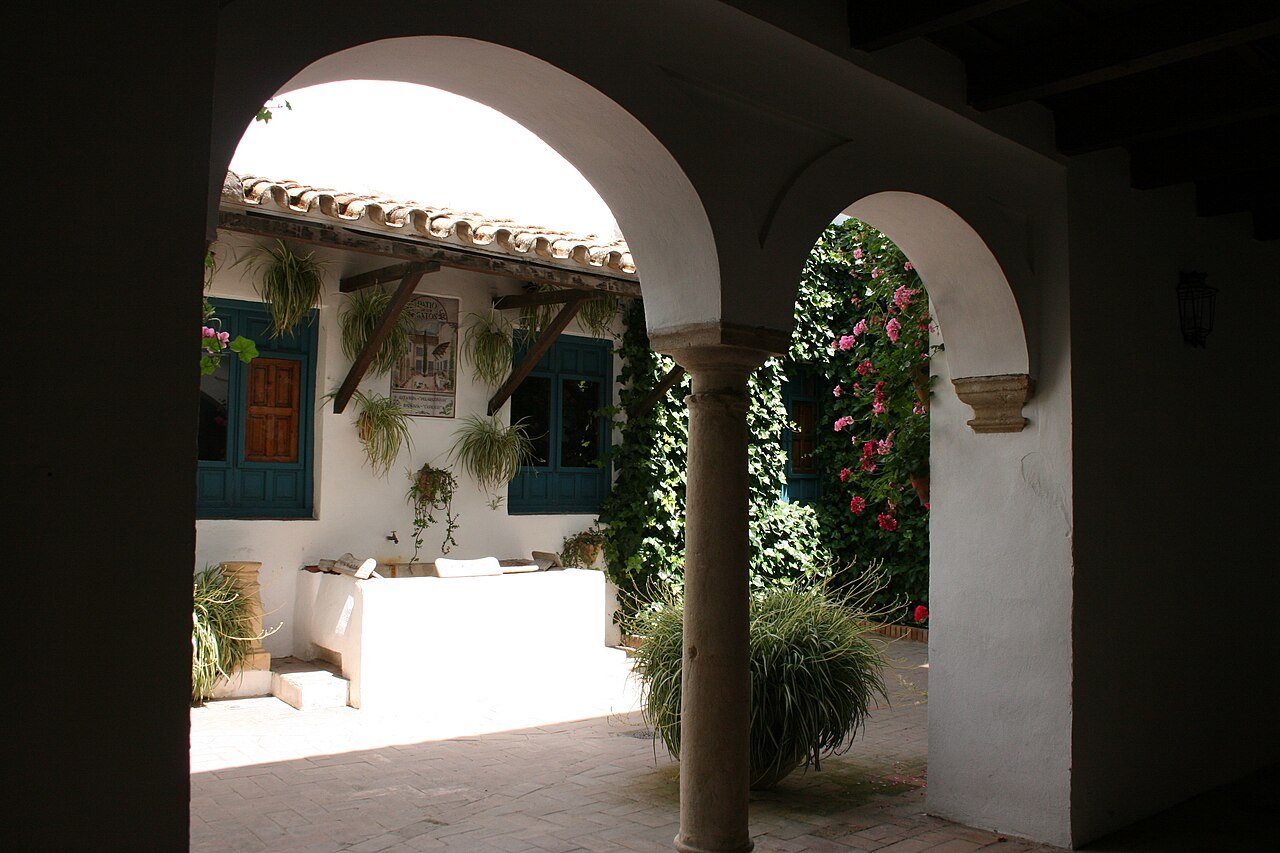
That's the part people don't always grasp going in: these are not museum exhibits dressed up for tourists. They are extensions of ordinary homes, decorated the way a Cordoban family has decorated them for generations — whitewashed walls, potted geraniums and carnations hung at eye level, a well or a millstone repurposed as a centerpiece, tile from the Roman or Moorish period sometimes worked into the floor. The planting method itself, dense pots on walls rather than beds in the ground, developed because many of these houses have no real garden space, just a shared central courtyard that once served several families at once.
What closes once May ends
Once the festival dates pass, the vast majority of those houses go back to being private residences. The doors close. Nobody is selling tickets or handing out leaflets. If you walk the streets of San Basilio or the old quarter near the Judería in July, you might spot a scrap of garden through a half-open door, or a pot of geraniums on an outer wall, but you are not getting inside to see the full courtyard, and knocking is not the move.
⚠️ A common mistake is booking a trip for, say, the first week of June, on the theory that it's "close enough" to May. It isn't. The festival runs on fixed dates set well in advance by the city, and missing it by even a week or two means missing it entirely. If seeing the private patios in full bloom is the actual goal of your trip, check the current year's dates directly with Córdoba's tourism office before you book anything else, including flights.
It's also worth knowing that even within the festival, not every house competes every year, and the exact list of open addresses shifts. Walking routes get published closer to the date — there's no fixed, permanent roster you can plan around a year in advance.
What's still there the rest of the year
None of this means Córdoba's courtyards are invisible for eleven months. A few options stay open on an ordinary schedule, and they're worth building into any itinerary regardless of season.
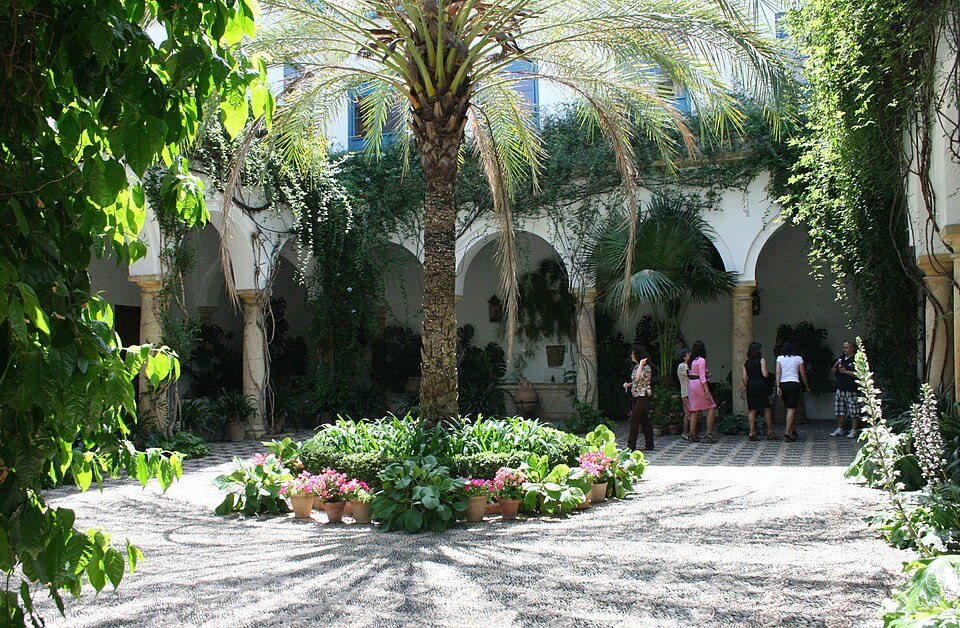
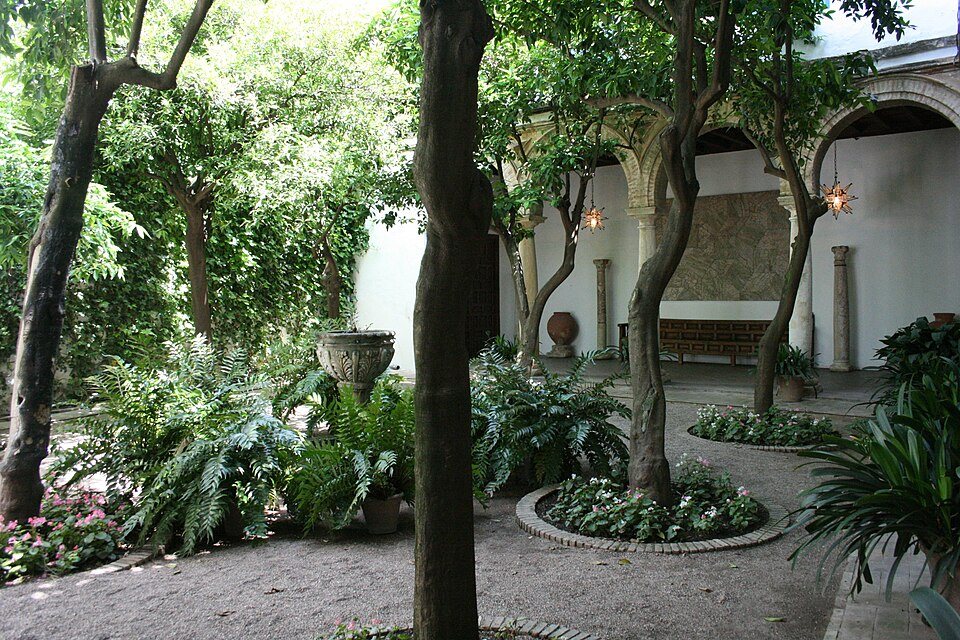
- Palacio de Viana is the most reliable stand-in. It's a noble house, not a private family home, built around a sequence of a dozen-odd courtyards, each planted differently — one citrus-heavy, one more architectural with a well at its center, another given over almost entirely to climbing vines. It operates as a paying attraction with regular visiting hours, so you're not depending on a festival calendar at all. ⭐ Go on a quiet weekday morning if you can; the courtyards photograph far better without a tour group bunched in the doorway.
- San Basilio, the neighborhood most associated with the festival, is still worth a walk outside May. Some residents there keep a more informal arrangement and will open a courtyard on occasional weekends or by request, independent of the official festival — there's no guarantee, and it varies house to house, but it's not nothing. The streets themselves, narrow and whitewashed, give a sense of the setting even with the doors shut.
- The Patio de los Naranjos at the Mezquita-Catedral is a different kind of courtyard entirely — orange trees in ranked rows, part of the mosque-cathedral complex rather than a private home — but it's a genuine green space in the middle of the old city, and it's accessible as part of a normal visit year-round.
- The gardens at the Alcázar de los Reyes Cristianos are formal rather than domestic — long reflecting pools, clipped hedges — but they scratch a similar itch for greenery against old stone, and they don't depend on any festival calendar either.
Planning around it, either way
If the patios festival is the reason for your trip, build everything else around those dates rather than trying to bend the dates around a trip you've already half-planned. May in Córdoba also means heavier crowds and warmer temperatures heading toward the punishing Cordoban summer, so book accommodation early and expect the Calleja de las Flores and other central streets to be considerably more crowded than usual.
If you're coming at another time of year — which, frankly, most visitors do, often without realizing the festival existed at all — don't treat the absence of open patios as a loss to route around. Córdoba in October or February has its own case for itself: thinner crowds at the Mezquita, more comfortable walking weather for the Judería and the Roman bridge, and the Palacio de Viana courtyards to yourself rather than shared with a tour bus's worth of people. Pair that with a trip out to Medina Azahara, or a day given over to food and drink in the Mercado Victoria, and the patios become one missing piece in a trip that's otherwise easier to manage, rather than the whole reason the trip exists.
For more on shaping a visit around what's actually open when you're there, see our itineraries page, or check day trips if Medina Azahara or the surrounding countryside is on the list.
In pictures