The streets immediately around the Mezquita are full of restaurants with laminated photo menus in four languages, and most of them are mediocre. That's not a complaint about tourism in general — it's just supply and demand. A restaurant two steps from the main door doesn't need to be good to fill its tables. Walk ten or fifteen minutes in almost any direction, though, and the food gets noticeably better and the prices stop being inflated for foot traffic. None of the places below require a taxi or a bus; they're all doable on foot from the old city, and a couple of them are genuinely worth the short detour on their own merits.
The mistake: eating where you're standing
The Judería is beautiful and worth wandering, but it is not where Cordobeses eat lunch. Many of the restaurants tucked into its narrow lanes exist almost entirely for people who've just left the Mezquita and don't want to walk any further. The tell is a menu with photos of every dish, salmorejo described in three languages, and a terrace that's somehow always got a free table at 2pm — in Córdoba, a genuinely good restaurant at peak lunch hour usually doesn't have a free table.
⭐ A reasonable rule of thumb: if you can still see the Mezquita's walls from your seat, assume the kitchen is coasting. Cross one of the invisible lines — out of the Judería proper, over to the Corredera, or across the river — and the calculation changes.
Plaza de la Corredera and the streets around it
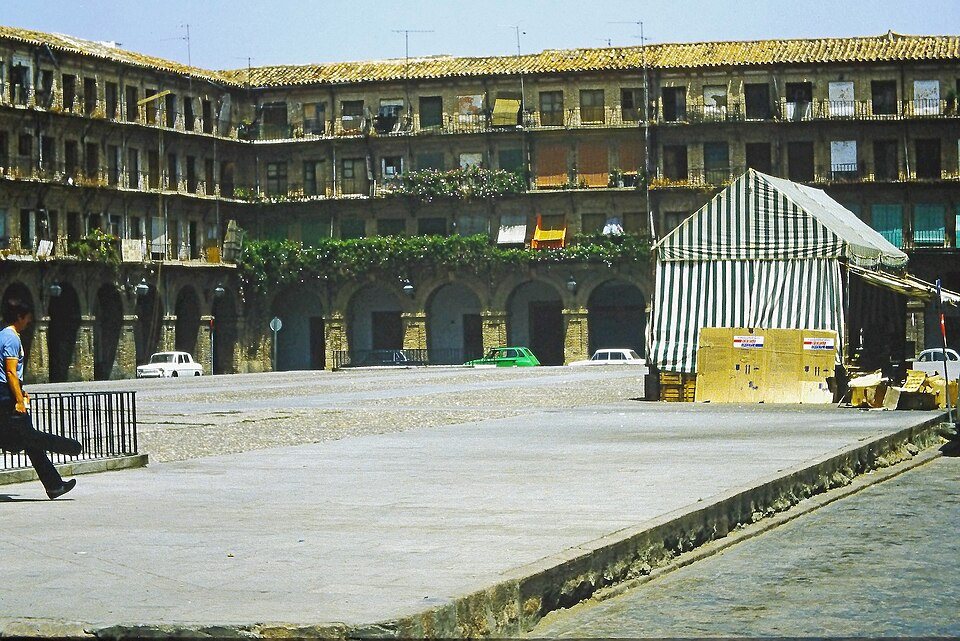
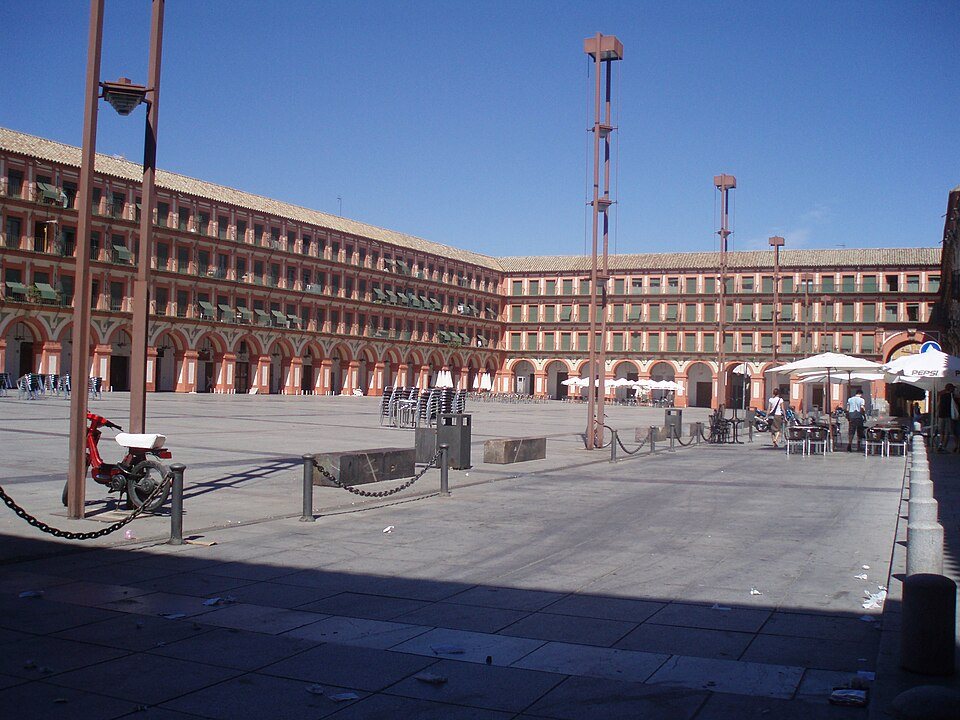
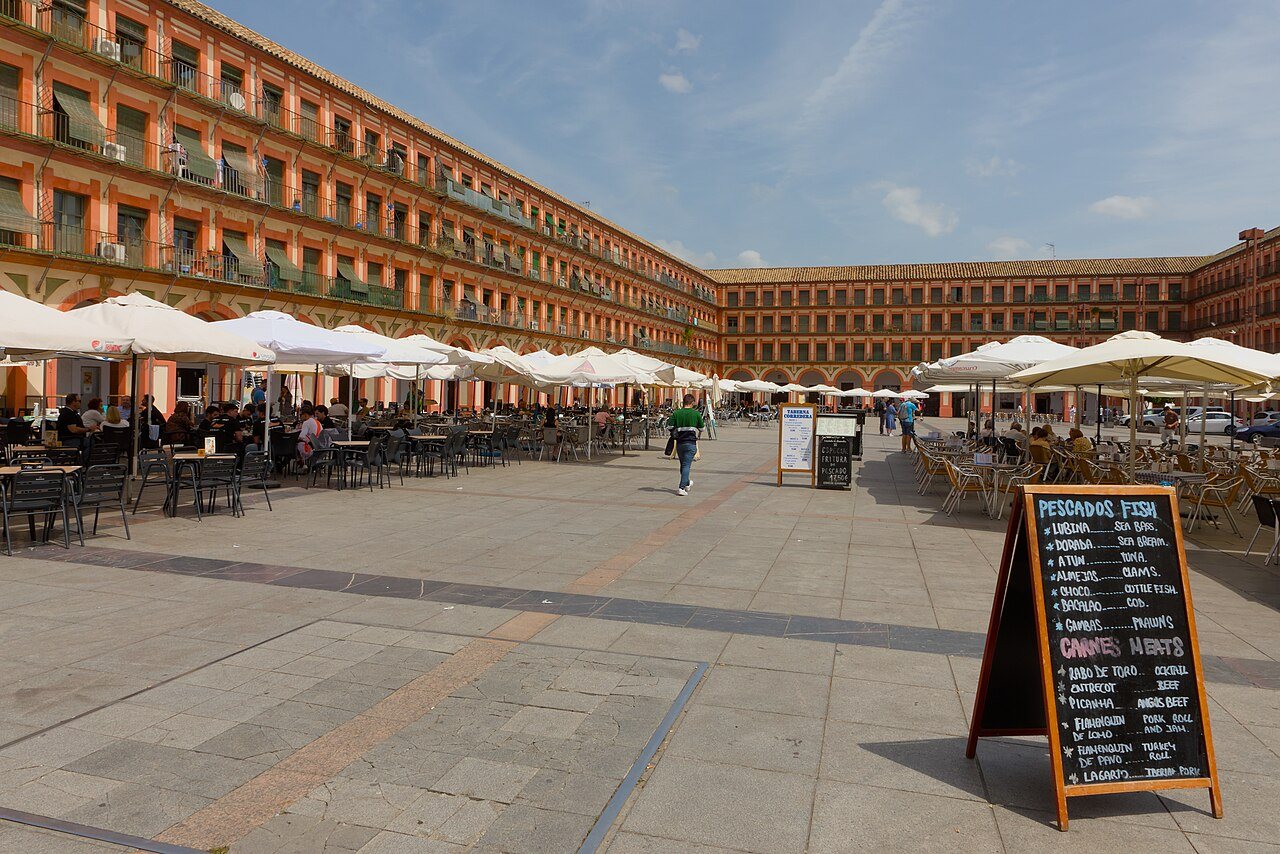
This is the single best move for someone who doesn't want to walk far. Plaza de la Corredera is a large arcaded square that used to host bullfights and markets, and it sits maybe ten minutes from the Mezquita on foot through the old quarter. The square itself has bars under its arches with outdoor seating, but the better food is often one street back, in the small bars that feed the covered market rather than the tourists photographing the architecture.
Look for flamenquín — a pork loin rolled around serrano ham, breaded and fried, cut into slices — and salmorejo served properly cold and thick, not the thinned-out version some central restaurants pass off to visitors who've never had the real thing. Montilla-Moriles wines, the local answer to sherry, are the standard pour here rather than the Rioja that gets pushed at tourist-zone places. ⚠️ The square can be very quiet midafternoon when the market stalls close and before the evening crowd arrives — if you want atmosphere, time your visit either side of that lull.
Mercado Victoria, for when the group can't agree
If you're traveling with people who want wildly different things — one person wants fish, another wants a burger, someone else just wants wine and ham — Mercado Victoria solves that problem. It's a covered market turned food hall in the Jardines de la Victoria, on the western edge of the old city, within walking distance of the Mezquita but far enough to have its own identity rather than feeling like an extension of the sightseeing route.
The format is standard for this kind of venue: individual stalls selling tapas, seafood, cured meats, and drinks, with shared seating in the middle. It's not where you go for a quiet, considered meal, and it leans toward visitors rather than being a neighborhood secret, but it is a legitimate improvement over the immediate Mezquita perimeter, and it's useful on a day when nobody has the energy to pick a single restaurant. Go either early or late if you want to actually sit down — the middle of the lunch and dinner windows get crowded.
Across the Puente Romano, into Campo de la Verdad
This is the option most visitors never consider, and it's the one locals mention when asked where they'd actually take you. Cross the Puente Romano — which you should walk anyway, ideally at dusk when the Mezquita's tower catches the light — and you land in Campo de la Verdad, a workaday neighborhood on the south bank of the Guadalquivir that has essentially none of the tourist infrastructure of the old city.
The restaurants and bars here cook for their own neighbors, which means prices and portions follow local expectations rather than tourist-season markups. It also means the pace is different: nobody's trying to turn your table quickly, and nobody's handing you an English menu before you've asked. If your Spanish is limited, that's a small hurdle, but pointing at what the table next to you is eating works fine in a pinch.
⭐ The views back across the river toward the Mezquita and the old bridge are better from this side than from almost anywhere in the old city itself, particularly from the stretch of riverbank near the Torre de la Calahorra. Eating on this side and walking back over the bridge afterward is, for the cost of about fifteen extra minutes, a noticeably different evening than staying put in the Judería.
San Basilio and the Alcázar Viejo quarter
South and west of the Alcázar de los Reyes Cristianos, the San Basilio neighborhood is best known for its flower-filled courtyard patios, but it also has a handful of small, unpretentious bars that don't bother with multilingual menus because they don't need to — their regulars already know what's good. This is a quieter, more residential stretch than the Judería, and the food reflects that: simple tapas, fried fish, stews depending on the season, and a slower rhythm generally.
It's also a sensible place to end up if you've spent the afternoon looking at patios rather than monuments — the neighborhood rewards wandering rather than beelining to one address, and a bar with no sign out front is often the one worth sitting down in.
Practical notes
None of this requires public transport; everything mentioned here is within a comfortable walk of the Mezquita, and the getting-around basics of the old city apply equally to all of it — narrow streets, uneven paving, and a layout that rewards wandering over route-planning. If you're building a day around food rather than monuments, it's worth reading the broader food and drink coverage and pairing it with one of the suggested itineraries, which tend to route past several of these areas anyway without you needing to detour specifically for a meal.
In pictures